

This project aims to monitor environmental parameters such as temperature, humidity, air quality, and noise levels using simple sensors and integrating the data with the FAVORIOT IoT platform.
1. Project Planning (1st Semester)
1.1. Define Project Objectives
- Monitor environmental parameters (e.g., temperature, humidity, air quality, noise levels).
- Provide real-time data visualization using FAVORIOT.
- Enable notifications for abnormal conditions (e.g., high pollution levels).
1.2. Research and Study
- Study the functionalities of the FAVORIOT platform.
- Learn how to integrate sensors with microcontrollers.
- Review previous IoT projects for reference.
1.3. System Design
- Hardware Design:
- Select the sensors and microcontroller.
- Plan the wiring and layout of components.
- Software Design:
- Develop a basic flow diagram for data collection, processing, and visualization.
- Decide on the programming languages (e.g., Arduino IDE for microcontroller, Python for data processing).
1.4. Prepare the Components
- Procure the sensors, microcontroller, and additional components.
2. System Development (1st Semester)
2.1. Assemble the Hardware
- Connect sensors to the microcontroller based on the design.
- Test each sensor individually to ensure it is functional.
2.2. Write and Test Sensor Code
- Write code for the microcontroller to read data from sensors.
- Validate the readings using serial communication (e.g., Arduino IDE Serial Monitor).
2.3. Integration with FAVORIOT
- Create an account on the FAVORIOT platform.
- Set up a project and create APIs for data ingestion.
- Configure the microcontroller to send data to FAVORIOT via HTTP POST requests.
3. System Enhancement (2nd Semester)
3.1. Real-time Data Visualization
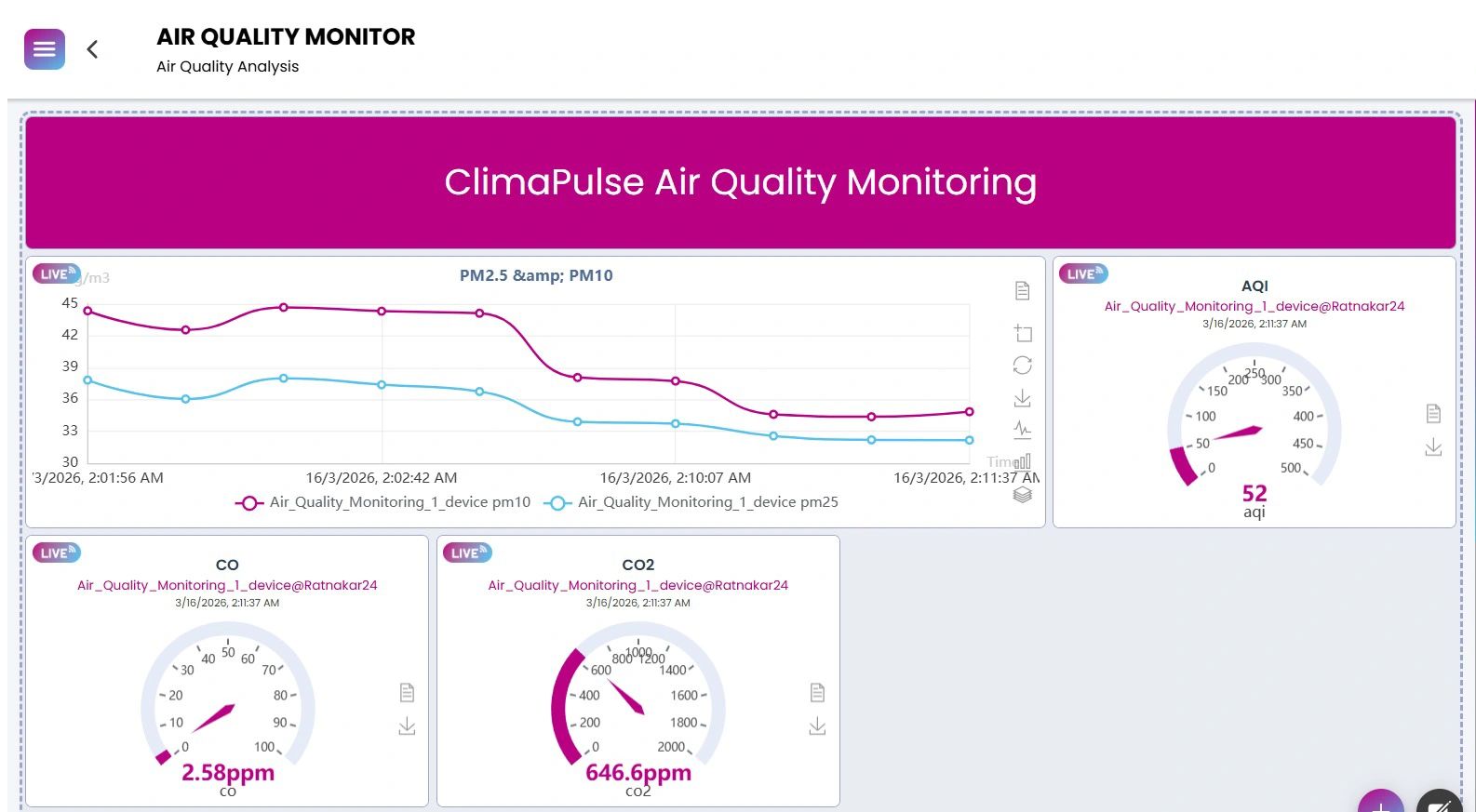
- Use FAVORIOT’s dashboard to visualize real-time data.
- Customize graphs and tables for better understanding.
3.2. Notifications
- Set up triggers on the FAVORIOT platform to send notifications (e.g., email, SMS) for specific thresholds.
3.3. Data Analysis
- Collect data over time and perform fundamental analysis.
- Export data from FAVORIOT for external analysis (e.g., using Excel or Python).
4. Testing and Deployment (2nd Semester)
4.1. Field Testing
- Place the system in a real-world environment (e.g., a park or campus).
- Monitor performance over days or weeks.
4.2. Debugging
- Identify and resolve any issues during testing (e.g., connectivity, sensor errors).
4.3. Final Deployment
- Deploy the system permanently in the selected environment.
- Document the deployment process.
5. Documentation and Presentation
5.1. Document the Project
- Write a detailed project report, including:
- Objectives, methodology, hardware/software, results, and conclusions.
5.2. Prepare for Presentation
- Develop slides showcasing the project’s design, implementation, and outcomes.
- Include live or recorded demonstrations of the system.
Bill of Materials (Estimated Costs in MYR)
| Item | Quantity | Price per Unit (MYR) | Total (MYR) |
|---|---|---|---|
| ESP32 (Wi-Fi enabled board) | 1 | 45.00 | 45.00 |
| DHT22 (Temperature & Humidity) | 1 | 28.00 | 28.00 |
| MQ-135 (Air Quality Sensor) | 1 | 45.00 | 45.00 |
| Sound Sensor (e.g., LM393) | 1 | 18.00 | 18.00 |
| Jumper Wires | 1 set | 20.00 | 20.00 |
| Breadboard | 1 | 15.00 | 15.00 |
| Power Adapter (5V) | 1 | 35.00 | 35.00 |
| Enclosure Box | 1 | 60.00 | 60.00 |
| Subscription to FAVORIOT | 1 | 15 per month or 100 per year |
15 per month or 100 per year |
Total Estimated Cost: ~ RM 486.00
Additional Notes
- Costs may vary depending on suppliers in Malaysia.
- Check local electronics stores (e.g., Cytron, Shopee, or Lazada) for competitive prices.
- Proper grounding and enclosures are essential for outdoor deployment.
- Explore sponsorship opportunities for platform subscription or components.
This detailed plan provides a structured approach to complete a 2-semester IoT project using the FAVORIOT platform. Let me know if you’d like more details on any step!

![[Project Challenge #15] Smart Shopping Behaviour Analytics Using the Favoriot Insight Framework (FIF)](https://iotworld.co/wp-content/uploads/2026/03/Project-Challenge-15-Decoding-Precinct-Shopping-Movement-Patterns.png)
![[Project Challenge #14] Smart Parks Powered by the Favoriot Insight Framework](https://iotworld.co/wp-content/uploads/2026/03/Smart-Parking-Data-Integration-Framework.png)

Leave a Reply