
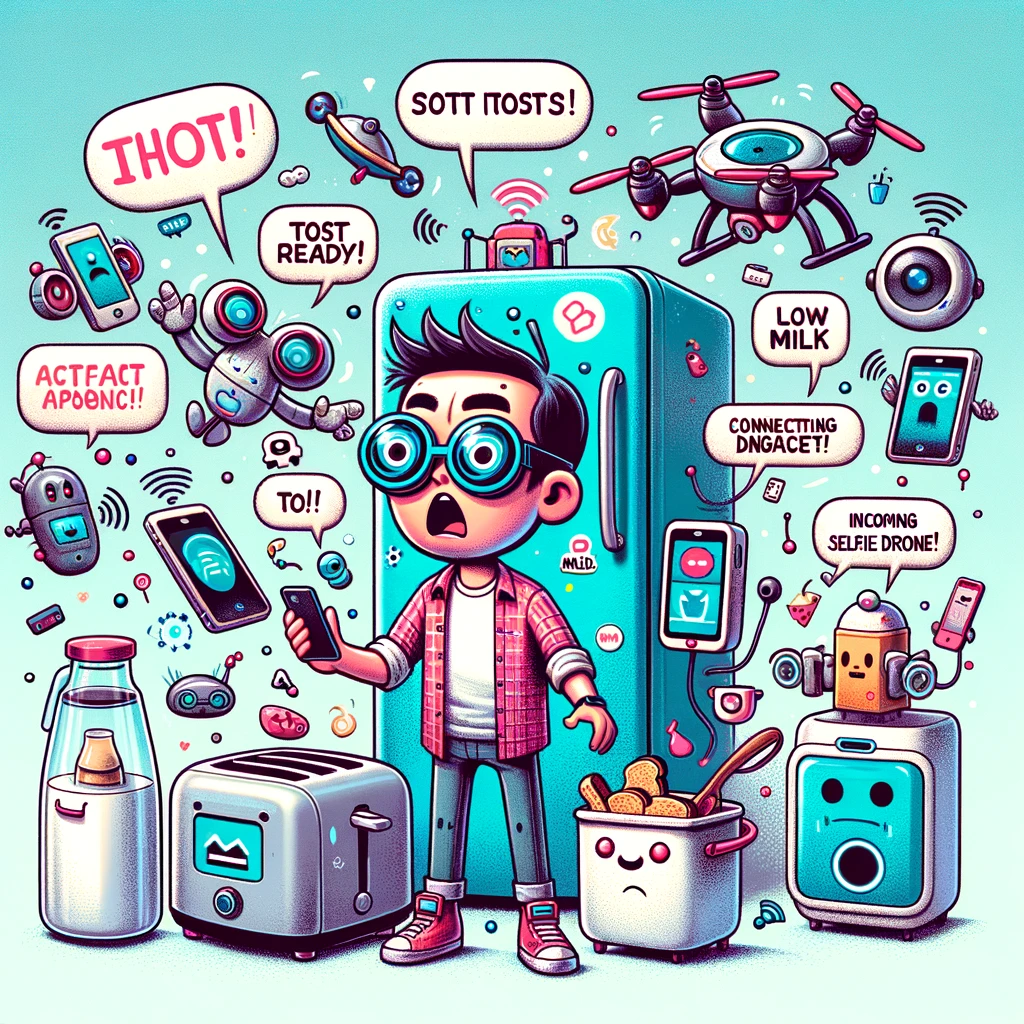
“What is this buzz about IoT? And who are these tech-savvy pioneers driving this revolution?” I’ve often asked myself these questions while observing how the Internet of Things (IoT) evolved from a niche concept into a global movement. Today, it’s not just a technology; it’s a mindset, a lifestyle, and a glimpse into the future. This transformation didn’t happen overnight—it’s the result of continuous innovation and a generation of bold thinkers I call Generation-IoT.
A Journey into the IoT Evolution
Let’s rewind to 2011 when the term Industry 4.0 began making waves. It was a bold vision for the future of manufacturing and automation. Fast forward to 2015, Klaus Schwab from the World Economic Forum rebranded this concept as the Fourth Industrial Revolution. Suddenly, everyone was talking about AI, robotics, and big data, with one unifying theme—the Internet of Things.
But IoT didn’t just appear out of thin air. “IoT” was first coined by Kevin Ashton in 1999. I remember reading about it back then and thinking, “This is going to change everything.” But it was far too early. Technology hadn’t caught up with the vision yet. It wasn’t until 2015—thanks to advances in cloud computing, cheaper sensors, and faster internet—that IoT truly began to flourish.
IoT started connecting everything: homes, factories, cities, and even our health devices. Suddenly, we were living in a world where machines could talk to each other, make decisions, and deliver data-driven insights. This was no longer science fiction; it was our reality.
Who is Generation-IoT?
It was around this time that I noticed a new kind of leader emerging—Generation-IoT. These aren’t your typical tech geeks or corporate leaders. They are a hybrid of dreamers, doers, and disruptors. They saw possibilities where others saw limitations, turning simple devices into powerful solutions.
But what defines Generation-IoT? Maciej Kranz’s description sums it up perfectly:
- Trailblazers First: These pioneers are at the forefront, daring to shape the future of IoT. They lead, experiment, and take risks.
- Eternal Learners: They’re not afraid of failure. Every setback is a lesson, and they use it to grow and form innovative alliances between the virtual and physical worlds.
- Beyond Labels: Forget job titles or age. These individuals can be anyone—students, startup founders, corporate leaders, or even retirees—united by their passion for innovation.
- Optimistic Trendsetters: They are unshakable in their belief that challenges are opportunities waiting to be unlocked.
- Business Visionaries: With a clear understanding of IoT’s transformative potential, they are changing how businesses operate and compete.
- Change Agents: They are relentless in pushing for change within their organizations, ensuring that IoT isn’t just another buzzword but a strategic priority.
- Adaptive Thinkers: The tech landscape is constantly evolving, and so are they. They embrace change and adapt quickly.
The Mindset of Generation-IoT
Generation-IoT isn’t just a group of individuals—it’s a mindset. I’ve met many of these pioneers during my journey in the IoT space. Their energy is contagious. I’ve seen university students build IoT prototypes that solve real-world problems in agriculture and healthcare. I’ve witnessed startup founders who started with just an idea and scaled it into a full-blown IoT solution that serves thousands of users.
“It’s not about the technology alone,” one of them once told me, “It’s about what we can do with it. It’s about solving problems that truly matter.”
And that’s the beauty of IoT—it’s not bound by industry, geography, or age. The only requirement? A curious mind and the determination to learn, adapt, and innovate.
Empowering Generation-IoT
So how do we nurture and empower this generation? It’s not enough to recognize their potential; we need to equip them with the right tools and resources. Here’s what they need:
1. Comprehensive IoT Training
Knowledge is power, and IoT is no exception. These pioneers must understand the fundamentals—how sensors work, how data flows from devices to the cloud, and how to make sense of this data using analytics and machine learning.
In my experience, one of the best starting points is to get hands-on with IoT middleware. Think of it as the bridge between hardware and software—the key to building scalable solutions. Once they master this, the possibilities are endless.
2. Access to IoT Platforms
There are many IoT platforms available, each with its own strengths. The challenge isn’t finding one; it’s learning how to use it effectively. Whether it’s commercial platforms like AWS IoT, Azure IoT, or local solutions like FAVORIOT, the goal is to explore, experiment, and build. And sometimes, the most innovative minds end up creating their own platforms!
3. Community Support
The journey can be lonely without the right community. I’ve always believed in the power of collaboration. Generation-IoT thrives in environments where they can share ideas, mentor each other, and co-create solutions. Hackathons, maker spaces, and IoT communities are fertile grounds for such collaborations.
4. Freedom to Innovate
Finally, we need to give them the freedom to innovate. Not every project will succeed, but every failure is a step closer to a breakthrough. Encourage them to take risks, experiment, and think outside the box.
The Future of Generation-IoT
Looking ahead, I’m incredibly optimistic. Generation-IoT is not just the future—they are the present. They’re building the smart cities we’ll live in, the connected health devices that will improve our lives, and the innovations we haven’t even imagined yet.
The question is—how do we ensure that this momentum continues? The answer lies in continuous learning, collaboration, and an unrelenting passion for innovation. IoT is not just a trend; it’s a revolution. And like every revolution, it needs its pioneers.
“So, are you ready to be part of Generation-IoT?”
If you are, welcome aboard. The journey is just beginning, and the possibilities are endless.



Leave a Reply