
Turning Promise into Predictable, Scalable Reality
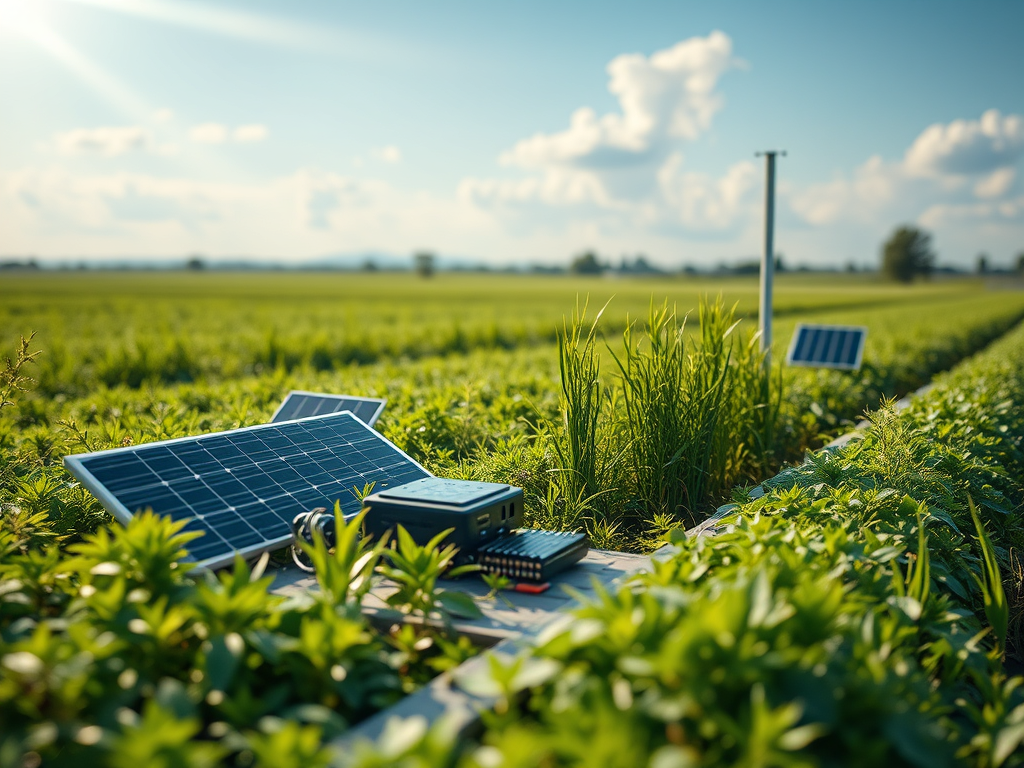
Energy harvesting has long been positioned as one of the most promising enablers for large-scale, long-term Internet of Things deployments. The idea is compelling. Sensors that power themselves using sunlight, vibration, thermal differentials, or ambient radio frequency signals offer the possibility of eliminating batteries, reducing maintenance costs, and enabling deployments in locations that are otherwise impractical.
From an industry platform perspective, energy harvesting represents both a significant opportunity and unresolved challenges that must be addressed before it can move from niche deployments to mainstream adoption.
Why Energy Harvesting Matters for IoT at Scale
The strongest case for energy harvesting emerges when IoT systems are deployed in environments where routine maintenance is costly, slow, or simply unrealistic. Agriculture fields, river basins, flood-prone zones, bridges, remote utility infrastructure, and large industrial estates often require hundreds or thousands of low-power sensing nodes.
In such scenarios, battery replacement becomes the hidden cost that undermines long-term viability. Each site visit carries labour costs, operational disruption, and risk. When multiplied across years and devices, these costs quickly outweigh the initial hardware investment.
Energy harvesting changes this equation. Devices that can draw power from their surroundings shift IoT economics from short project cycles toward long-term operational thinking. Maintenance schedules become lighter. Deployments can scale without proportional increases in operational overhead. Asset owners begin planning on five- to ten-year horizons rather than twelve-month pilot cycles.
This is the opportunity that attracts platform providers, solution integrators, and infrastructure owners alike.
The Reality Check: Gaps That Still Exist
Despite the promise, real-world deployments reveal gaps that cannot be ignored. These gaps are not theoretical; they surface repeatedly during system rollouts and post-deployment analysis.
1. Predictability of Power Availability
Energy harvesting depends on environmental conditions, which are rarely uniform or stable. Sunlight varies by geography, season, and shading. Vibration differs across structures and usage patterns. Airflow and thermal gradients fluctuate unpredictably.
For IoT platforms, power unpredictability directly translates into data unpredictability. When devices fail to harvest sufficient energy, data transmission becomes sporadic—sensors miss-reporting windows. Alerts arrive late or not at all.
From an operational standpoint, unreliable power undermines trust in the system. Asset owners do not only want data; they want confidence that the data will arrive when needed.
2. Lack of Standardised Power Behaviour
Another challenge lies in the diversity of energy harvesting implementations. Sensor manufacturers adopt different combinations of micro-solar panels, piezoelectric harvesters, supercapacitors, rechargeable batteries, and power management circuits.
Each design behaves differently under stress. Charge and discharge cycles vary. Cold-start behaviour differs. Recovery time after prolonged energy scarcity is inconsistent.
For an IoT platform, this creates complexity. Without consistent power behaviour models, it becomes difficult to forecast device health, estimate uptime, or plan maintenance interventions. Platforms are forced to treat each device type as a special case, which limits scalability.
3. Gaps in Developer Expectations
A recurring issue in energy-harvesting projects is unrealistic expectations. Hardware teams often focus on peak harvesting conditions rather than average or worst-case scenarios. Energy budgets are calculated optimistically, while long-term consumption drift is underestimated.
Over time, firmware updates, increased reporting frequency, or added security features push power consumption beyond original assumptions. Devices that appeared stable during testing begin to fail months into deployment.
When this happens, confidence erodes not only in the device but also in the entire energy-harvesting approach.
Where the Opportunity Truly Lies
While these gaps present challenges, they also define the next phase of opportunity. The real value does not lie solely in harvesting energy, but in managing it intelligently at the platform level.
From Data Platform to Deployment Advisor
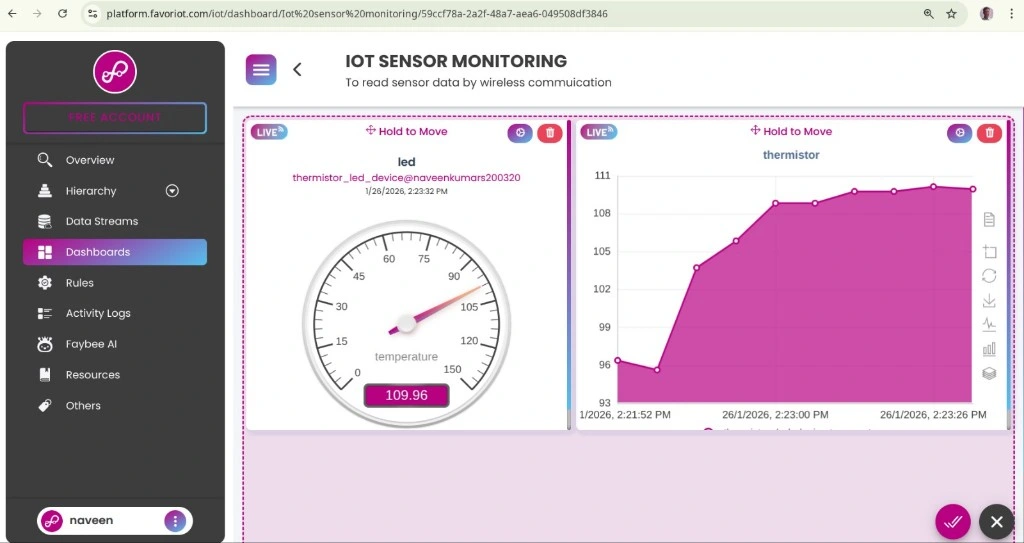
IoT platforms (example: Favoriot) have traditionally focused on data ingestion, visualisation, and analytics. Energy harvesting introduces a new dimension: power telemetry.
By collecting detailed power-related metrics such as harvested energy levels, charge cycles, storage capacity, and consumption patterns, platforms can build behavioural models for energy-harvesting devices. Over time, these models enable forecasting, anomaly detection, and adaptive system tuning.
This shifts the platform’s role. It becomes not just a repository for sensor data, but an advisor for deployment decisions.
Developers can receive guidance on optimal reporting intervals. Operators can identify devices at risk of power starvation before failure occurs. Design teams can validate assumptions against real-world performance data.
Closing the Loop Between Hardware and Operations
When power telemetry is integrated into the platform, feedback loops emerge. Firmware can adapt dynamically based on available energy. Reporting schedules can adjust to environmental conditions. Maintenance can be planned based on predictive indicators rather than reactive failures.
This closes the gap between hardware design and operational reality. Energy harvesting stops being a static design choice and becomes a managed system capability.
Making Energy Harvesting Predictable
For energy harvesting to scale, predictability must become the standard rather than the exception. This requires collaboration across the ecosystem.
Device manufacturers need more straightforward guidelines on power telemetry exposure. Platform providers must invest in power-aware analytics and modelling. Solution integrators must set realistic expectations with clients, grounded in measured data rather than theoretical maxima.
When these elements align, energy harvesting transforms from a risky experiment into a dependable infrastructure strategy.
Looking Ahead
Energy harvesting will not replace batteries overnight, nor should it be treated as a universal solution. It excels in specific environments and use cases. Its real strength lies in long-duration deployments where maintenance access is constrained, and system longevity matters.
The future of energy harvesting in IoT is not defined by how much energy can be captured, but by how well that energy is understood, managed, and integrated into platform-level decision making.
For the industry, the opportunity is clear. The next generation of IoT platforms must treat energy as a first-class data stream, not an afterthought. Those that do will enable more resilient, scalable, and trusted IoT systems across critical sectors.




Leave a Reply