

Most IoT use cases do not need Deep Learning.
Traditional Machine Learning is usually enough.
Now let me explain why, in a very grounded way.

Start from the nature of IoT data
Most IoT systems deal with:
- Time-series sensor data
- Numbers like temperature, pressure, vibration, voltage, flow rate
- Regular sampling over time
This type of data is structured and repetitive.
For this, classic ML works very well.
When Machine Learning is sufficient
ML is more than enough when you want to:
- Detect anomalies in sensor readings
- Predict equipment failure
- Forecast trends like energy usage
- Classify normal vs abnormal behaviour
- Trigger alerts based on learned patterns
Typical ML techniques handle this comfortably:
- Statistical models
- Regression
- Clustering
- Isolation-based anomaly detection
- Tree-based models
They:
- Need less data
- Train faster
- It is easier to explain
- Run well on edge devices or simple servers
For most factories, buildings, farms, and cities, this is the sweet spot.
When Deep Learning starts to make sense
Deep Learning becomes useful when IoT data is:
1. High-dimensional or unstructured
Examples:
- Camera images
- Video streams
- Audio signals
- Radar or LiDAR data
Here, patterns are too complex to describe manually.
2. Highly complex interactions
Examples:
- Many sensors are interacting in non-linear ways
- Very subtle patterns that evolve slowly
- Long-term temporal dependencies
3. You have enough data and computing power
Deep Learning needs:
- Large datasets
- Strong GPUs or accelerators
- Longer training cycles
- More careful tuning
Without these, DL often performs worse than simpler ML.
A simple comparison
| Aspect | Machine Learning | Deep Learning |
|---|---|---|
| Data needed | Low to moderate | High |
| Training time | Short | Long |
| Explainability | Easier | Harder |
| Compute cost | Low | High |
| Edge deployment | Easy | Challenging |
| Typical IoT use | Very common | Selective |
A real-world intuition
I usually describe it like this:
- ML is a skilled technician who knows the equipment well.
- Deep Learning is a specialist brought in when things get very complex.
You don’t call a specialist for every routine job.
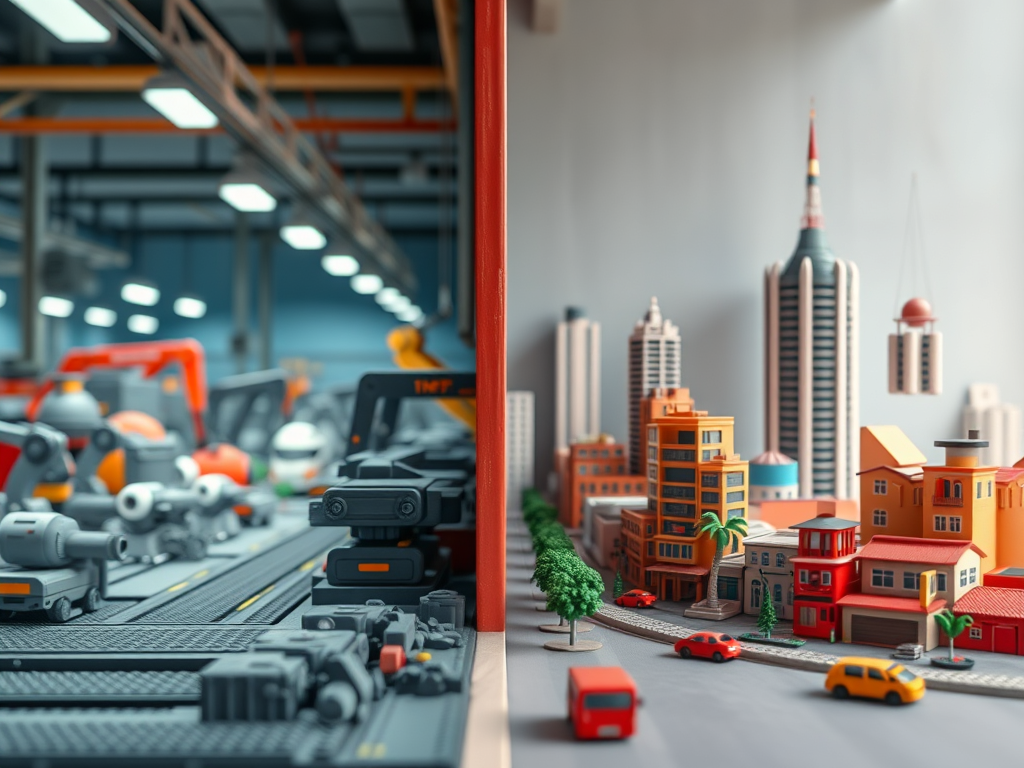
Visual intuition: ML vs DL in IoT
You will notice:
- Most dashboards, alerts, and predictions rely on ML
- Deep Learning appears mostly in vision-based or audio-based IoT systems
A practical recommendation
If you are building an IoT system, ask these questions first:
- Is my data mostly numbers over time?
- Do I need predictions, anomalies, or trends?
- Do I need fast results with limited compute?
If the answer is yes, start with ML.
Only consider Deep Learning if:
- ML clearly fails
- The problem involves images, sound, or very complex patterns
- You have the data volume and hardware to support it
One sentence to remember
In IoT, use the simplest model that solves the problem reliably.
Most of the time, that model is Machine Learning, not Deep Learning.
FAVORIOT Intelligence References
- Official Announcement -Favoriot Evolves into an AIoT Platform with Built-in Machine Learning
- Why Favoriot Chooses Machine Learning Over LLMs
- Machine Learning vs Deep Learning in IoT
- Traditional Machine Learning vs Large Language Models (LLMs)
- Why Favoriot’s Built-in Machine Learning Matters for AI Researchers and IoT Developers
- Why Favoriot’s ML Infrastructure Reduces Costs
- AI and ML in IoT, Explained Without the Jargon
- Start Anomaly Detection in IoT with Less Data
- AI and ML in IoT, Explained Without the Jargon
- The Key Differences: Favoriot’s Rule Engine 2.0 and AI Agents
- The Role of Machine Learning in IoT Systems
- Favoriot’s Rule Engine 2.0: A Structured Approach to IoT Automation
- A Quiet Shift Is Coming to the Favoriot Platform

![[Project Challenge #13] Smart Library Behaviour Monitoring Using the Favoriot Insight Framework](https://iotworld.co/wp-content/uploads/2026/03/image-1.png)

![[Project Challenge #12] Smart Pedestrian Safety and Monitoring Using the Favoriot Insight Framework (FIF)](https://iotworld.co/wp-content/uploads/2026/03/Smart-Pedestrian-Safety-Framework-3.png)
Leave a Reply