
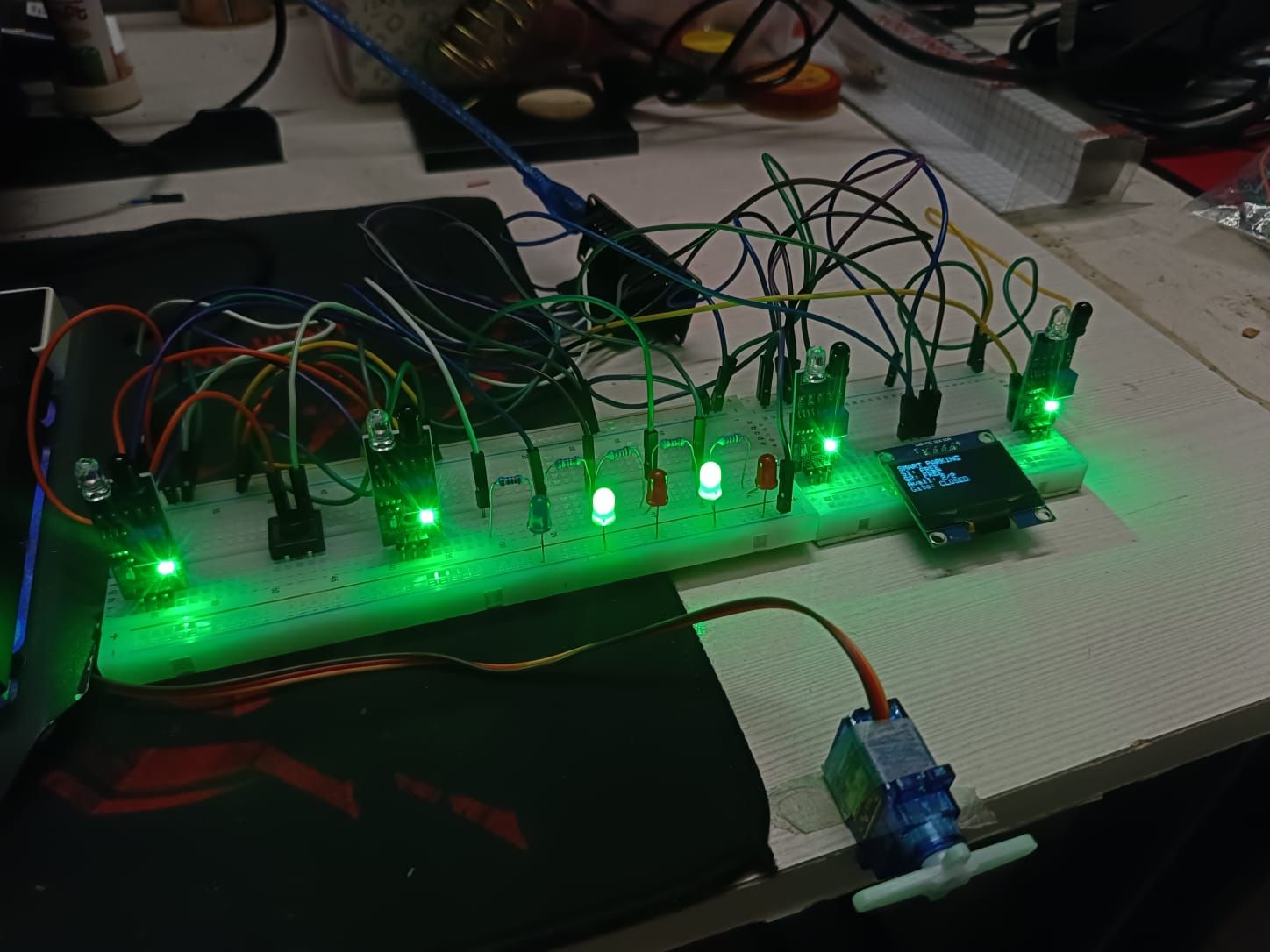
Congratulations to Ratnakar Sahoo on successfully extending his embedded system into a true IoT deployment using the Favoriot platform.
On Day 23 of his 30 Embedded Projects Challenge, he demonstrated more than hardware control. His Smart Parking Management System integrates IR-based occupancy detection, servo control with safety interlocks, state-machine-driven embedded logic, structured cloud data modelling, and rule-based alerting.
At the device level, the ESP32 manages time-critical control such as slot detection, gate automation, and obstruction handling. At the cloud level, Favoriot evaluates critical conditions through its rule engine and triggers email notifications for events such as “Parking Full” and “Gate Obstruction.” This clear separation between device control and cloud intelligence reflects principles of real-world IoT architectures.
By publishing structured JSON data including slot status, gate state, obstruction flags, and duration metrics, the project moves beyond firmware logic and into scalable system design. It shows a solid understanding of cloud observability, event-driven processing, and safety-critical monitoring.


If given the opportunity to further enhance the project using the Favoriot Beginner Plan features, several improvements could elevate it to the next level:
- Multi-Device Modelling
Structure the system as multiple logical devices such as Gate Controller, Slot Monitoring Units, and Safety Modules. This would simulate a real parking facility deployment rather than a single-board prototype. - Enhanced Dashboards
Leverage dashboard widgets to provide operational views such as:
- Real-time occupancy percentage
- Gate status timeline
- Obstruction duration trends
- Daily vehicle entry counts
This transforms telemetry into actionable operational visibility.
- Advanced Rule Engine Logic
Refine alerts by introducing:
- Duration-based triggers (e.g., obstruction > 10 seconds)
- Alert cooldown intervals
- Severity levels for warning vs critical events
Such improvements reduce noise and align the system with production-grade event handling.
- Analytics and Data Aggregation
Using Beginner Plan analytics capabilities, the system can generate:
- Peak hour usage trends
- Obstruction frequency analysis
- Average gate open duration
- Daily and weekly occupancy patterns
This enables the project to transition from reactive monitoring to data-driven insights.
- Basic Predictive Indicators
If the frequency of obstructions exceeds a defined threshold, an automatic maintenance notification may be triggered. This introduces early predictive maintenance concepts into the system.
Overall, this project reflects a meaningful progression: from embedded control to a structured, cloud-connected IoT system with intelligent rule processing. With additional use of Beginner Plan capabilities such as analytics, dashboards, and refined rule management, it has strong potential to evolve into a portfolio-level smart infrastructure case study.
Other IoT Projects
- Hands-On IoT Exploration: Lessons from Adekunle Joshua
- From Embedded Project to Scalable IoT Architecture: A First-Year Student’s Growth Story
- Learning IoT by Doing: Ts. Dyg Khayrunsalihaty Bariyyah Abang Othman’s Troubleshooting Journey
- From Classroom to Gold Medal: A Student’s Real-World IoT Journey with Favoriot at ITEX
- Hands-On IoT Exploration: Lessons from Adekunle Joshua

![[Project Challenge #10] Smart Rock Melon Agriculture Using the Favoriot Insight Framework (FIF)](https://iotworld.co/wp-content/uploads/2026/03/Data-Driven-Rock-Melon-Framework.png)
![[Project Challenge #9] Smart Dump Site Monitoring Using Favoriot Insight Framework](https://iotworld.co/wp-content/uploads/2026/03/Intelligent-Waste-Site-Monitoring-Guide.png)
![[Project Challenge #8] Smart Pole (Intelligent Pole) for Smart Cities Using the Favoriot Insight Framework](https://iotworld.co/wp-content/uploads/2026/03/Evolution-of-Intelligent-Urban-Lighting.png)
Leave a Reply