
When people look at IoT platform pricing pages, the first instinct is to compare features.
“How many devices?”
“How many dashboards?”
“How many API calls?”
But from a business point of view, the real question is different.
What stage are you at in your IoT journey, and what outcome are you trying to achieve?
Different FAVORIOT plans are not just technical packages. They represent different stages of growth for developers, system integrators, and organisations building connected solutions.
Below is a simple way to understand the plans from a business outcome perspective, not a technical one.

1. Free Plan
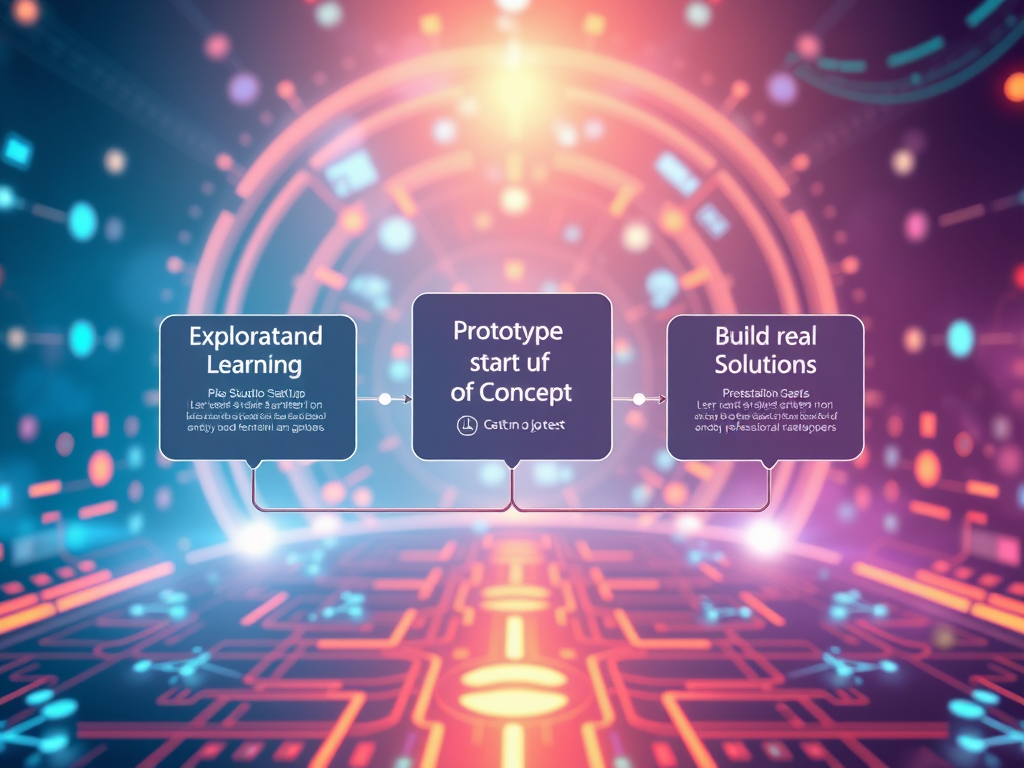
Outcome: Exploration and Learning
This plan is for people curious about IoT who want to experiment without financial risk.
Typical users:
- Students
- IoT hobbyists
- Early learners
- Engineers exploring a new platform
What they are trying to do:
- Connect their first device
- Send sensor data to the cloud
- Build their first dashboard
- Understand how IoT systems work
The business impact at this stage is knowledge creation.
People are not trying to run operations yet. They are learning how data flows from sensors into insights.
Think of this stage as the sandbox.
It is where ideas are tested before becoming real projects.
For universities and individuals, this stage builds future IoT talent.
2. Lite / Beginner Plan
Outcome: Prototype and Proof of Concept
Once someone understands the basics, the next step is to answer a bigger question.
“Can this idea actually solve a real problem?”
This is where prototype projects and proof-of-concept deployments happen.
Typical users:
- Startups validating a new product
- Researchers are testing a solution
- Engineers building pilot projects
- SMEs experimenting with digital monitoring
Examples of outcomes:
- Monitoring temperature in a cold storage facility
- Tracking energy consumption in a building
- Monitoring water levels in flood-prone areas
- Tracking equipment usage in factories
At this stage, the goal is validation.
Businesses want to prove:
- The idea works
- The data is useful
- The solution can deliver value
The financial investment is still small, but the impact is large, because this stage determines whether a project moves forward or stops.
Many IoT initiatives succeed or fail right here.
3. Developer Plan
Outcome: Build Real Solutions
This is where things start to become serious business systems.
Developers and system integrators are no longer testing ideas. They are building solutions that customers will actually use.
Typical users:
- Professional developers
- System integrators
- IoT solution providers
- Technology startups building commercial products
What changes at this stage?
The focus moves from experimentation to solution development.
Instead of building a simple dashboard, teams begin building systems that can:
- Monitor operations continuously
- Generate alerts when problems occur
- Support decision-making
- Integrate with other applications
Examples of business impact:
A manufacturing company can detect machine overheating early and prevent downtime.
A logistics company can monitor cold chain temperature and protect product quality.
A facility management team can monitor power usage and identify waste.
For system integrators, this plan enables them to deliver solutions to multiple customers.
This is where IoT stops being a “project” and starts becoming a service offering.
4. Enterprise Plan
Outcome: Mission-Critical Operations
Large organisations operate very differently from pilot projects.
They require systems that can support large deployments, multiple users, and operational reliability.
Typical users:
- Corporations
- Government agencies
- Smart city projects
- Industrial operators
- Infrastructure operators
At this stage, IoT is not just a monitoring tool.
It becomes part of the operational infrastructure.
Examples of impact:
A city can monitor flood sensors across multiple districts and trigger early warnings.
A utility provider can monitor energy consumption across hundreds of facilities.
A manufacturing group can monitor production assets across multiple factories.
The outcome here is operational intelligence.
Instead of reacting to problems after they occur, organisations can:
- Detect issues earlier
- Respond faster
- Reduce operational risk
- Improve resource usage
The platform becomes part of the organisation’s digital nervous system.
How the Plans Reflect an IoT Journey
Another way to understand the pricing structure is to see it as a growth ladder.
Free
Learning and experimentation
Lite / Beginner
Testing ideas and building prototypes
Developer
Building real solutions
Enterprise
Running mission-critical operations
Each stage reflects a different level of business maturity.
Why This Matters for Developers and System Integrators
For developers and system integrators, the different plans support different business models.
Early stages allow them to:
- learn the platform
- prototype quickly
- Demonstrate ideas to clients
Later stages allow them to:
- deploy real customer solutions
- support operational systems
- scale deployments across many devices and sites
This reduces the risk of jumping straight into large deployments without first proving the concept.
Why This Matters for Businesses
Many companies hesitate to start IoT projects because they fear large upfront investments.
A staged approach solves this problem.
Businesses can start small:
- Test the idea
- Validate the value
- Expand deployment
This creates a low-risk path toward digital transformation.
Instead of committing to large budgets immediately, organisations can scale gradually as the value becomes clear.
The Bigger Picture
The different FAVORIOT plans are not just pricing tiers.
They represent a structured pathway for building IoT solutions, from learning to large-scale deployment.
- Students and developers learn the fundamentals.
- Startups and researchers validate new ideas.
- System integrators build commercial solutions.
- Enterprises run operational systems.
Each stage supports a different outcome, but they all share the same destination.
Turning raw sensor data into meaningful insights and better decisions.
FAVORIOT Resources
- General
- Pricing
- How to Choose the Right Favoriot Plan for Your IoT Project
- Favoriot Ecosystem Plan
- Why Universities Need an IoT Ecosystem, Not Fragmented IoT Accounts
- When IoT Builders Outgrow Dashboards: Why the Favoriot Platform Developer Plan Exists
- Favoriot Launches Lite Plan to Support Students, Beginners, and Early IoT Builders
- Faybee AI – IoT Copilot
- Favoriot Intelligence
- Favoriot Insight Framework
- What is Favoriot Insight Framework (FIF)?
- Favoriot Machine Learning
- Why Favoriot’s ML Infrastructure Reduces Costs
- Why Favoriot’s Built-in Machine Learning Matters for AI Researchers and IoT Developers
- Favoriot’s Rule Engine 2.0: A Structured Approach to IoT Automation
- The Key Differences: Favoriot’s Rule Engine 2.0 and AI Agents
- IoT & AIoT Labs
- Trainings
- Favoriot Partner Network
- Videos (Playlist & Highlights)
- How-To Use Favoriot Platform Playlist
- Favoriot IoT World Playlist
- IoT Deep Dive Playlist
- Favoriot Sembang Santai Playlist
- IoT Deep Dive – Episode 7 (FAVORIOT Insight Framework)
- IoT Deep Dive – Episode 4 (Favoriot Partner Network Solves IoT Fragmentation)
- IoT Deep Dive – Episode 5 (Building IoT Solutions With Favoriot Middleware)
- Favoriot IoT World – Episode 3 (Unboxing the AIoT Lab)
- Favoriot IoT World – Episode 6 (Favoriot AIoT Architecture – Data to Decision)
- Favoriot IoT World – Episode 4 (Favoriot’s IoT Pricing)
- FAVORIOT Projects
- FULL FAVORIOT RESOURCES
- Others




Leave a Reply