

How Energy Data Becomes Trusted Decisions
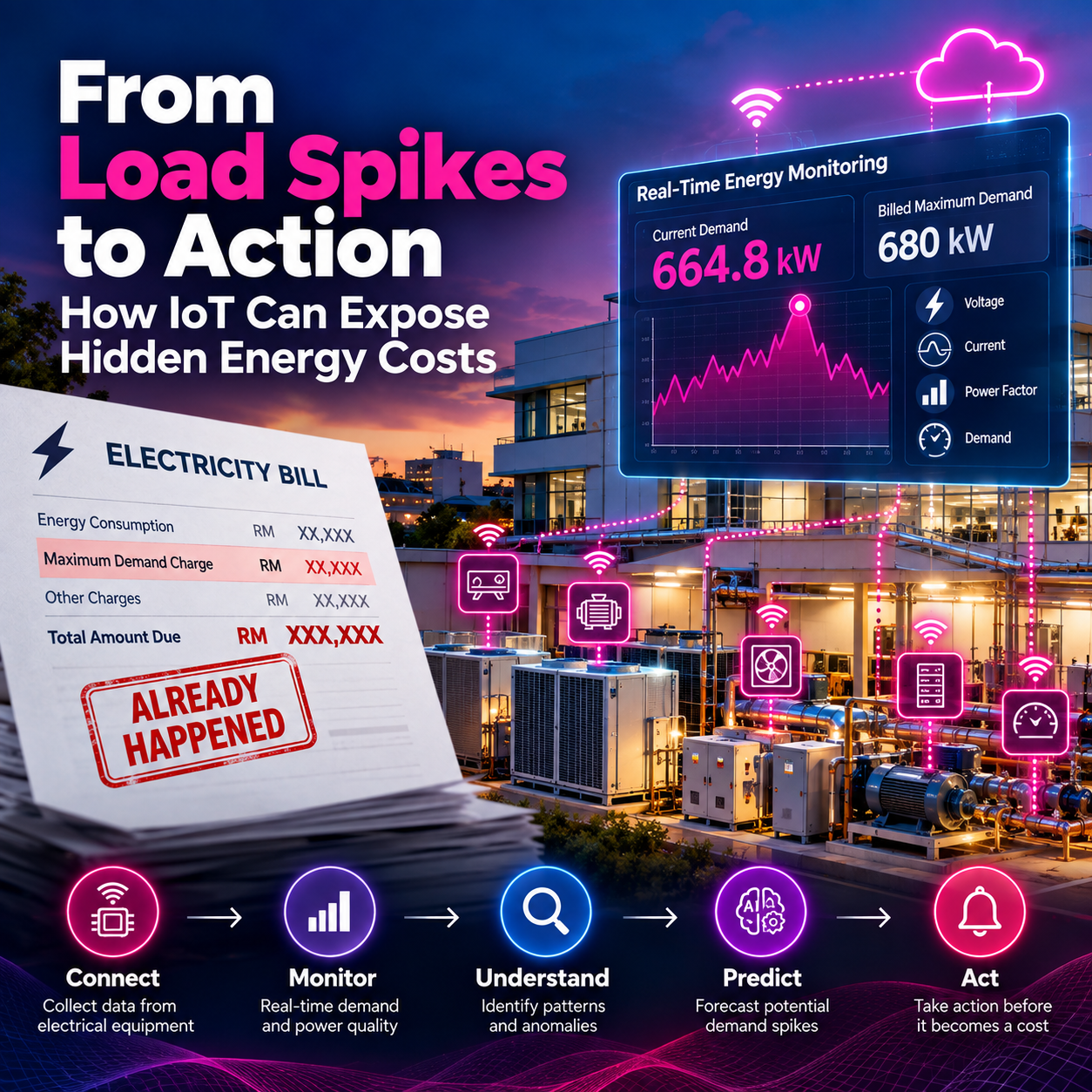
Smart Energy Management is not only about meters, dashboards, and monthly bills. It begins with clear intent, trusted data, meaningful insights, and timely action.
Smart buildings need more than energy visibility
Many organisations can see energy consumption, but fewer can explain why waste happens, what risks are coming, and which actions should be taken next.
Designed with purpose before technology
Smart Energy Management must start by asking a simple question: why is energy data being collected?
The Favoriot Insight Framework helps organisations move from raw telemetry to practical decisions for cost control, asset care, ESG reporting, and operational governance.
The result is a building that is not merely monitored, but understood.
Smart Energy Management must be designed with intent before technology.
The right question comes before the right sensor.
The 6-layer path from energy data to action
The original article used Layer 0 to Layer 5. This webpage renumbers them as Layer 1 to Layer 6.
Intent and Context
- Define the real energy management problem.
- Set what normal consumption means for the building.
- Identify risks such as peak demand penalties, carbon exposure, or equipment failure.
- Decide what actions should happen when anomalies appear.
Data Foundation
- Collect data from main meters and submeters.
- Monitor HVAC, chillers, lighting, elevators, and mechanical systems.
- Include solar generation, water, and gas readings where needed.
- Send trusted telemetry into Favoriot’s time series storage.
Descriptive Insights
- View real-time total consumption.
- Track historical energy patterns.
- Compare load by zone, floor, or tenant.
- Measure energy intensity per square meter.
Diagnostic Insights
- Compare current behaviour against baselines.
- Link temperature, occupancy, and power usage.
- Detect causes behind nighttime spikes or weekend usage.
- Move from symptoms to causes.
Predictive Insights
- Forecast future energy demand.
- Estimate peak load risks.
- Identify seasonal trends.
- Generate early warnings for high-load conditions.
Prescriptive Insights
- Trigger alerts based on configurable rules.
- Recommend corrective actions.
- Support load shifting during peak tariff periods.
- Escalate ESG deviations to management.
From passive infrastructure to measurable energy intelligence
With the Favoriot Insight Framework, buildings can move beyond reactive troubleshooting. Energy data becomes structured evidence for better decisions, stronger accountability, and clearer sustainability reporting.
Energy management affects cost, reliability, ESG, and governance
When energy behaviour becomes measurable, teams can act earlier and manage buildings with greater confidence.
Financial Discipline
Energy costs are a controllable operational expense. Structured monitoring helps reduce waste and manage peak demand.
Operational Reliability
Energy anomalies can signal equipment stress. Early detection protects assets and reduces sudden failures.
ESG and Sustainability
Time-stamped energy data supports carbon reporting, emissions tracking, and green building evidence.
Governance
Energy performance becomes measurable, comparable, and reviewable across teams and buildings.
“Without trusted data, trusted insights cannot exist.”
“The building begins to think ahead rather than react late.”
“At this stage, insight is turned into action.”
Practical areas where Smart Energy Management delivers value
Each use case can move naturally across the six layers of the Favoriot Insight Framework.
Ready to turn your building’s energy data into trusted decisions?
Favoriot can help your organisation strengthen cost control, sustainability performance, ESG credibility, and operational accountability through Smart Energy Management.



Leave a Reply