

The National Archives serve as the collective memory of a nation, preserving invaluable records that document a country’s historical, political, social, and cultural evolution. These institutions are not mere storage facilities; they are custodians of original records that span centuries — including government documents, treaties, personal correspondences of national leaders, rare photographs, maps, films, and manuscripts. Such materials are often irreplaceable, and their preservation requires more than secure storage — it requires meticulous environmental control.
Controlling the indoor environment of archival repositories is essential to ensuring the long-term integrity, authenticity, and usability of these historical records.
The Role of the National Archives
National archives exist in nearly every country, from the National Archives and Records Administration (NARA) in the United States to the National Archives of the United Kingdom (TNA), Archives Nationales in France, and Arkib Negara Malaysia. Their shared mission is to preserve public records that reflect citizens’ legal rights, document institutional memory, and provide reliable sources for historical research and national identity.
To fulfil this role, national archives must protect their collections from physical, chemical, and biological deterioration — much of which is directly influenced by environmental factors.
Why Environmental Conditions Matter
Archival records are inherently vulnerable to environmental stressors. Paper, film, photographs, textiles, and magnetic media each react differently to fluctuations in temperature, humidity, light, air pollutants, and biological threats. Even short-term exposure to unfavourable conditions can lead to irreversible damage without proper control.
Here are the key environmental elements that must be managed:
1. Temperature Control
High temperatures accelerate chemical degradation in paper and film-based materials, causing embrittlement, fading, and discolouration. Inconsistent temperature conditions — particularly frequent fluctuations — compound the problem by causing physical stress to the materials.
Recommended Range:
- 16°C – 20°C for general paper documents
- 2°C – 10°C for photographic and film-based materials
Archival facilities should implement stable, round-the-clock climate control systems to prevent these fluctuations.
2. Humidity Regulation
Relative humidity (RH) is perhaps the most critical environmental factor affecting archival preservation. Excessive humidity promotes mold growth, encourages pest infestation, and causes warping or adhesion between pages and photographs. Conversely, overly dry environments can lead to desiccation, rendering materials brittle and prone to cracking.
Recommended Range:
- 45% – 55% relative humidity
Sophisticated dehumidifiers, humidifiers, and RH sensors are required to maintain this balance.
3. Light Exposure Management
Light, particularly ultraviolet (UV) radiation, causes irreversible damage to archival materials. It breaks down cellulose in paper, fades pigments and dyes, and accelerates the deterioration of photographic emulsions. Even visible light, when exposed for a prolonged period, can significantly harm sensitive records.
Mitigation Strategies:
- Use of UV-filtered lighting (e.g., LED lights)
- Limiting light exposure duration
- Store materials in light-proof enclosures when not in use
- Displaying facsimiles for exhibitions where possible
4. Air Quality and Pollutant Control
Airborne pollutants such as sulfur dioxide, nitrogen oxides, and ozone contribute to the acidification and chemical breakdown of materials. Dust particles carry fungi, bacteria, and chemical residues that can damage surfaces and promote deterioration.
Proper air filtration through HEPA filters, regular environmental cleaning protocols, and strict restrictions on chemical usage within the facility are critical to minimising exposure.
5. Biological Threats and Pest Control
Pests such as silverfish, cockroaches, and rodents are attracted to organic materials used in archival storage — including paper, adhesives, leather, and textiles. Their activity can cause extensive physical damage.
Preventive measures include:
- Regular inspections and integrated pest management (IPM) systems
- Sealing entry points
- Quarantine procedures for newly acquired materials
- Strict no-food policies in archival areas
Consequences of Environmental Neglect
Several high-profile preservation disasters underscore the importance of environmental control in archival facilities:
- The 2009 collapse of the Cologne City Archives in Germany resulted in the loss of over 1,000 years of historical records. Structural and environmental issues contributed to the tragedy.
- The 2018 fire at Brazil’s National Museum destroyed approximately 20 million historical and scientific items — a catastrophe partly attributed to outdated infrastructure and lack of climate control systems.
- Thailand’s 2011 floods submerged government archive facilities, prompting widespread loss and highlighting the need for disaster-resilient designs.
These examples demonstrate that even historically significant collections are vulnerable without appropriate environmental protection.
The Role of Technology in Environmental Monitoring
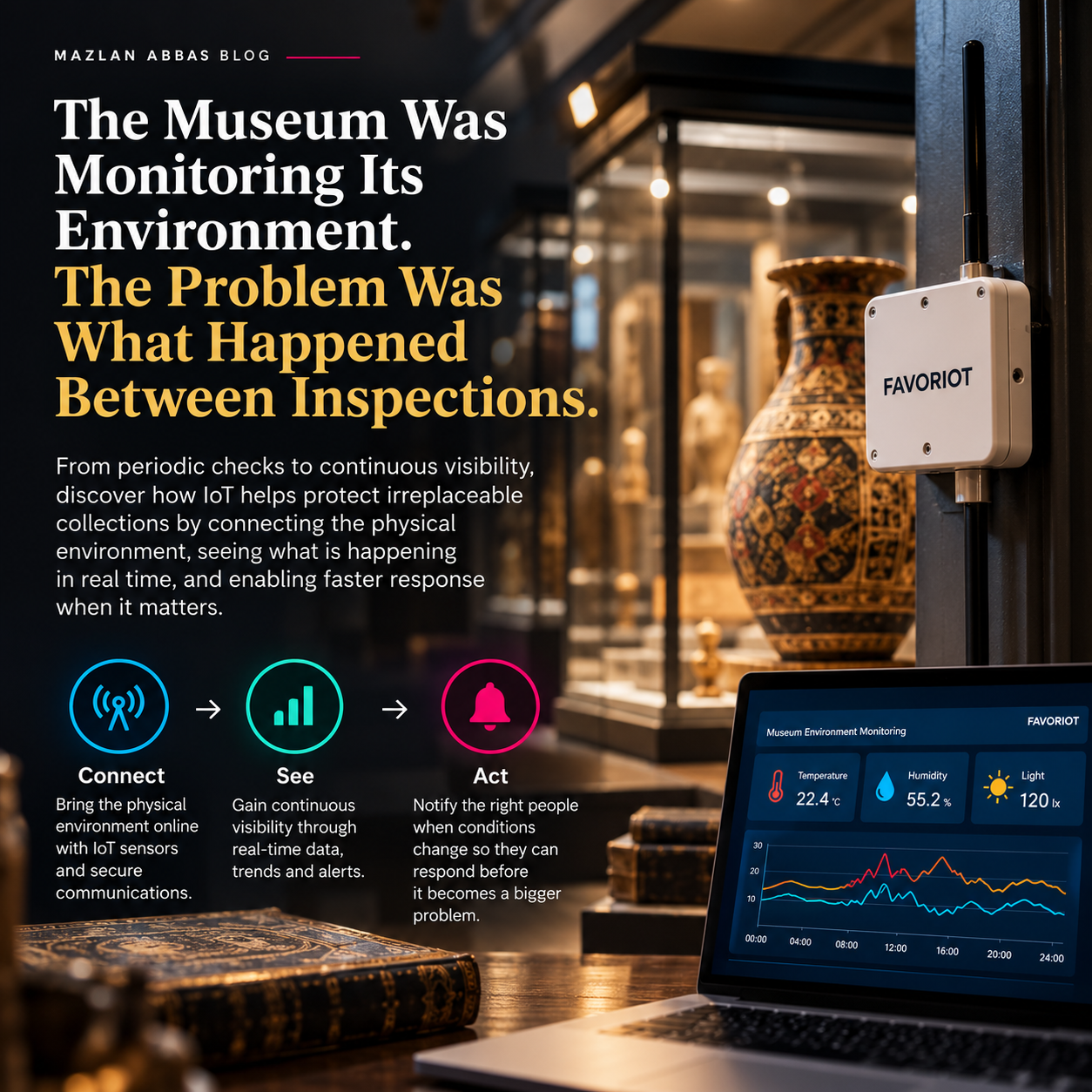
Modern technologies, particularly IoT-based monitoring systems, have become integral to environmental control in archives. By deploying sensors to continuously measure temperature, humidity, air quality, and light levels, archivists can:
- Receive real-time alerts when conditions deviate from safe thresholds
- Monitor environmental trends over time
- Integrate with HVAC systems for automated climate response
- Generate data for preservation audits and compliance documentation
Such systems reduce human error and provide archival institutions with the tools to manage risks proactively.
Organizations like FAVORIOT, for example, have developed IoT platforms that integrate environmental sensors with dashboards and alert mechanisms, ensuring timely responses and long-term preservation.
Digitization: A Complement, Not a Substitute
While digitization is vital for enhancing accessibility and reducing the handling of original materials, it cannot replace the original document’s historical, legal, and material value. Digital formats also come with their own preservation challenges, such as format obsolescence, media decay, and technological dependencies.
Therefore, physical preservation — supported by controlled environments — remains the cornerstone of archival practice.
Conclusion: Protecting the Legacy of a Nation
Environmental control in national archives is more than a technical requirement; it is a national responsibility. The failure to maintain stable and appropriate conditions endangers centuries of history and threatens future generations’ ability to understand their heritage.
By investing in climate control, air purification, light management, and real-time monitoring technologies, archival institutions preserve not only documents but also identity, continuity, and truth.
Governments, archivists, and stakeholders must recognize that every degree, every percent of humidity, every beam of light matters when safeguarding a nation’s memory.
As nations move towards digital transformation, let us not forget that preserving the past is the foundation for building a resilient and informed future.




Leave a Reply