
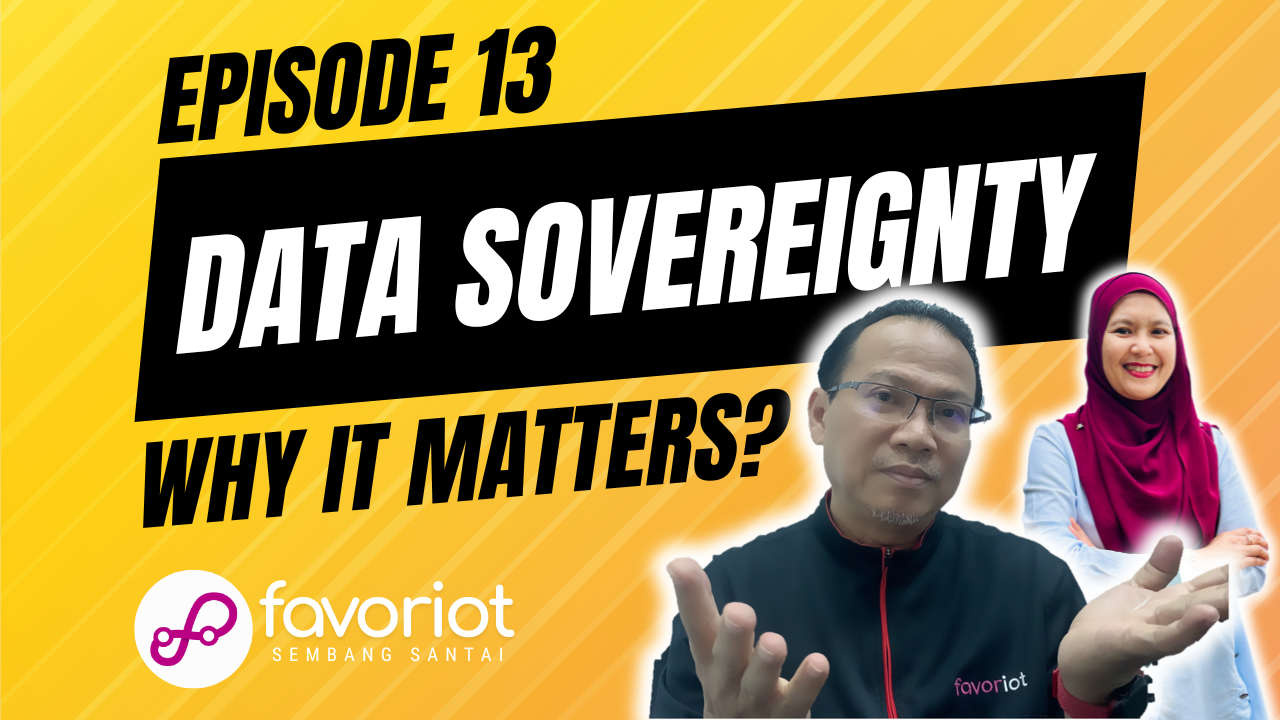
In Episode 13 of Favoriot Sembang Santai, Dr. Mazlan Abbas and Zura Huzali explored why data sovereignty matters more than ever for Malaysia and the wider ASEAN region. This conversation unpacked real issues around how nations manage and protect data in a world driven by connected devices, digital services, and global cloud platforms.
What Is Data Sovereignty?
Data sovereignty refers to the idea that data is subject to the laws and governance structures of the country where it is collected and stored. For governments, businesses, and citizens, this raises important questions about privacy, control, and who should decide how data is used. In this episode, Dr. Mazlan and Zura framed data sovereignty as more than just a technical concern. It is about national rights, economic competitiveness, and the safety of digital ecosystems.
Malaysia’s Position in a Digital World
Malaysia, like many Southeast Asian countries, is rapidly adopting digital technologies. Smart city initiatives, e-commerce, health services, and logistics systems all generate massive streams of data. The hosts discussed why policymakers and business leaders need clear frameworks that ensure data generated in Malaysia remains protected under Malaysian law, while still enabling innovation.
A key point made was that data stored overseas or controlled by multinational cloud providers can create legal and strategic risks. Without strong data governance policies, countries may lose the ability to enforce privacy protections, prevent misuse, and address public-interest concerns. This has implications for digital trust, investment decisions, and long-term economic resilience.
ASEAN’s Collective Stakes
The conversation expanded the scope from Malaysia to the broader ASEAN community. With cross-border digital services, supply chains, and regional partnerships, ASEAN nations face shared challenges. Harmonising data policies across borders was presented as a way to balance openness with security. Such alignment can improve regional cooperation in trade, public services, and innovation ecosystems.
For ASEAN governments, this means working together to set standards that respect local legal systems while enabling smoother data flows for commerce and public good. The episode touched on why regional consensus on data rules strengthens collective bargaining power with global tech platforms and ensures local players aren’t sidelined in future digital markets.
Practical Takeaways for Businesses and Innovators
For technology builders, startups, and organisations leveraging IoT and cloud platforms, Episode 13 offered practical advice. Dr. Mazlan and Zura highlighted how companies should anticipate data governance requirements early in product designs and business models. This ensures compliance with evolving regulations and can build user trust.
They pointed out that transparency in data policies and secure design practices not only protects users but can also be a competitive advantage. Organisations that take data governance seriously are more likely to attract customers, partners, and investors who value ethical and lawful handling of data.
Why This Matters Now
As digital economies grow and devices proliferate, data sovereignty isn’t just a future challenge. It is already shaping how businesses operate and governments legislate. Episode 13 gave listeners a grounded view of these forces, especially within the context of Malaysia and ASEAN’s ambition to be strong players in global tech.
The discussion made it clear that safeguarding data through robust local policies and regional collaboration can protect citizens, enable innovation, and strengthen economic foundations in a world where data has become a strategic resource.





Leave a Reply