
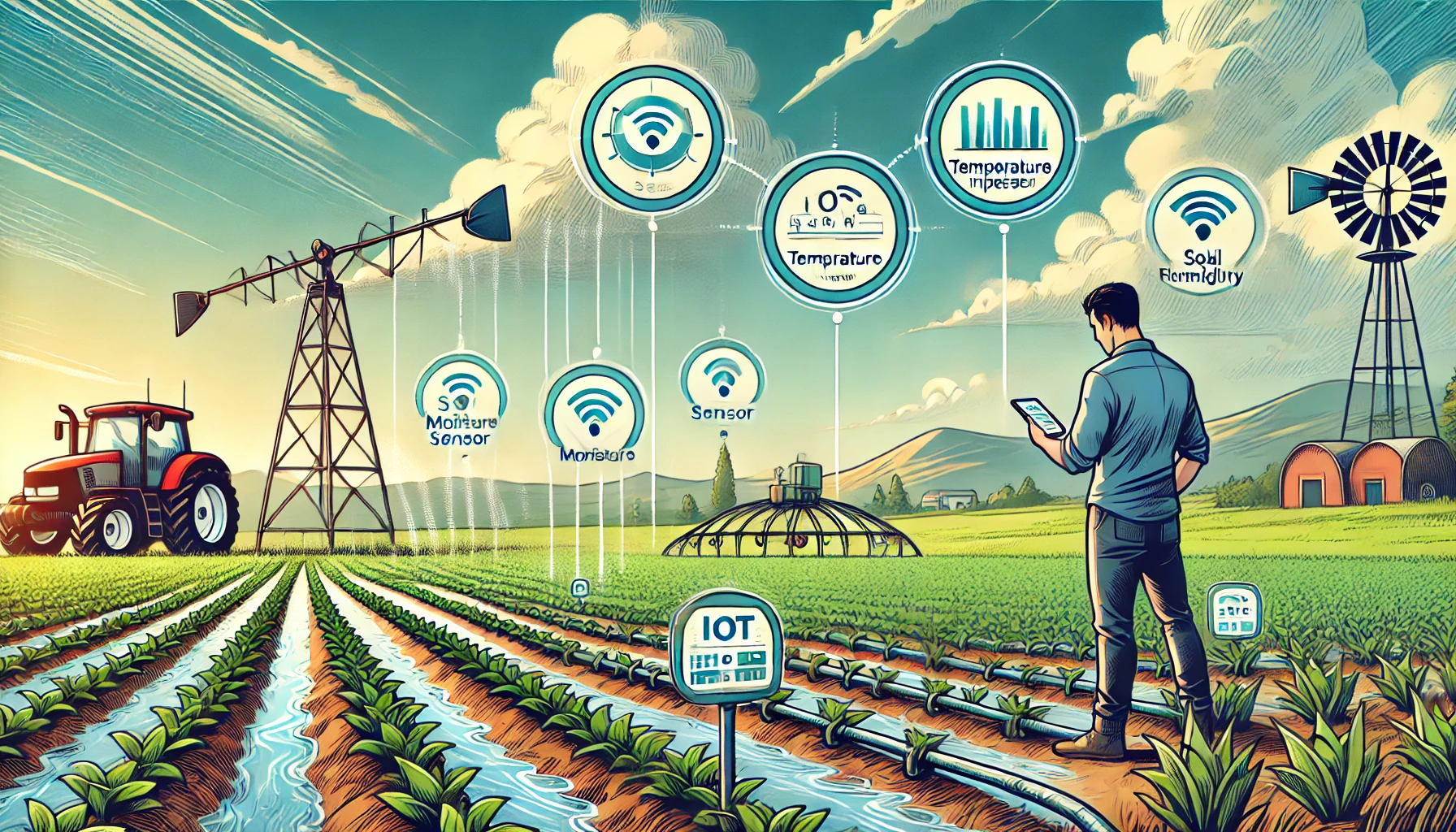
This approach outlines the steps to develop a commercial smart agriculture IoT solution and includes a business model for monetizing the product.
System Overview
The commercial system leverages industrial-grade IoT components and the Favoriot platform to provide farmers with reliable data and actionable insights. It is designed for scalability and durability and is suitable for large-scale farming operations.
Features:
- Environmental Monitoring:Soil moisture, temperature, humidity, and water level sensors.
- IoT Gateway:Industrial-grade gateway for secure data transmission and processing.
- Solar-Powered System:Ensures 24/7 operation even in remote areas.
- Cloud Integration:Uses the Favoriot platform for data analytics, visualization, and notifications.
Components and Costs
| Component | Quantity | Cost per Unit (USD) | Total Cost (USD) |
|---|---|---|---|
| Industrial IoT Gateway (e.g., Advantech WISE-4000) | 1 | 500 | 500 |
| Industrial Soil Moisture Sensor | 2 | 60 | 120 |
| Industrial Temp & Humidity Sensor (e.g., SHT31) | 1 | 80 | 80 |
| Industrial Water Level Sensor | 1 | 70 | 70 |
| Waterproof Enclosures | 2 | 40 | 80 |
| Solar Power System (Optional) | 1 | 150 | 150 |
| Wiring and Connectors | 1 kit | 30 | 30 |
| Favoriot Subscription Plan | 1 | MYR 180/month | MYR 1200 (1 year) |
| Installation and Maintenance | – | ~150 | 150 |
Estimated Total Cost per System: ~$1,480 USD
Implementation Steps
1. System Design
- Modular design with industrial-grade sensors and gateways.
- IoT gateway handles data transmission and edge processing.
2. Hardware Setup
- Install sensors in the field for soil, temperature, and water monitoring.
- Use waterproof enclosures for durability.
- Set up the IoT gateway with cellular or Ethernet connectivity.
3. Software Integration
- Configure the Favoriot platform for real-time data visualization.
- Create custom dashboards and notification systems.
4. Testing and Deployment
- Test the system in a small field for 1–2 months.
- Scale to larger areas after successful testing.
Business Model
To commercialize this solution, follow a B2B Subscription-Based Business Model tailored for agriculture businesses, cooperatives, and large-scale farmers.
1. Value Proposition
- Enhanced Productivity: Reduce water usage, optimize fertilizer application, and increase crop yield.
- Cost Savings: Minimize resource waste and labour costs.
- Reliability: Industrial-grade hardware ensures long-term performance.
- Accessibility: Data is available via the web or mobile app.
2. Revenue Streams
- Subscription Plans:Offer tiered monthly or annual plans based on farm size or number of devices.
- Example: $50/month for small farms, $200/month for large farms.
- Hardware Sales:Sell the IoT system as a one-time purchase, with additional installation fees.
- Example: $1,500 per system.
- Value-Added Services:Provide consulting services for custom solutions.
- Offer advanced analytics or AI-based predictive models for an additional fee.
- Maintenance and Support:Charge annual fees for hardware maintenance and technical support.
3. Target Market
- Primary Market: Commercial farmers managing medium-to-large-scale farms.
- Secondary Market: Government and NGOs focusing on agricultural sustainability.
- Geographic Focus: Areas with high adoption of technology in agriculture, such as North America, Europe, and Asia-Pacific.
4. Marketing and Sales Strategy
- Direct Sales:Partner with agricultural cooperatives or local distributors.
- Offer live demonstrations of the product in use.
- Digital Marketing:Create informative videos and case studies showcasing benefits.
- Use social media ads targeting agricultural businesses.
- Partnerships:Collaborate with government agencies and NGOs promoting smart farming.
- Partner with Favoriot to leverage their platform’s credibility.
5. Cost Structure
- Fixed Costs:
- R&D and prototyping.
- Salaries for technical and sales teams.
- Variable Costs:
- Hardware procurement and manufacturing.
- Installation and maintenance.
6. Profit Margin
- Aim for a profit margin of 30–40% per unit sold.
- Break-even within 1–2 years, depending on subscription uptake.
Example Commercial Use Case
A large-scale vegetable farm in a semi-arid region deploys:
- 10 soil moisture sensors for precise irrigation.
- 5 temperature and humidity sensors for greenhouse monitoring.
- 2 IoT gateways to cover multiple fields.
- A solar-powered system for uninterrupted operation.
Impact:
- 30% reduction in water usage.
- 20% increase in crop yield.
- ROI achieved in less than 12 months.



Leave a Reply