

Operational Blindness Means Different Things to Different People
And that is precisely why it remains unsolved.
Most conversations about IoT problems focus on the wrong thing.
They talk about connectivity failures, data quality issues, platform limitations, and integration complexity. All real problems. But none of them capture the deeper condition that quietly affects almost every organisation that has invested in IoT.
That condition is Operational Blindness.
Operational Blindness is the state where an organisation has data but still cannot see clearly enough to act with confidence.
Read that carefully. It does not say the organisation has no data. It does not say the technology failed. It does not say the investment was wasted. In most cases, the devices are deployed, the platform is running, and the dashboards exist. And yet something is missing. Visibility is incomplete. Insights arrive too late. Decisions still rely on guesswork.
That gap between data and clarity is what Operational Blindness describes.
Why It Is Harder to Solve Than It Looks
The most dangerous thing about Operational Blindness is that it does not announce itself.
There is no error message. No alert. No red flag on any dashboard. It accumulates slowly, over months and years, until someone asks the uncomfortable question in a meeting: why are we still reacting to problems instead of anticipating them? And no one has a satisfying answer.
This is what makes it so persistent. Organisations mistake activity for visibility. They confuse data collection with operational clarity. They invest heavily in IoT infrastructure, tick every deployment milestone, and still find themselves operating without genuine insight. The sensors are working. The data is flowing. But Operational Blindness continues.
The reason is structural, not technical. And understanding that distinction matters enormously.
Blindness Looks Different Depending on Where You Stand
Here is where most discussions about Operational Blindness fall short.
When the term is applied broadly to “organisations” or “the industry,” it is accurate but not actionable. Because the specific form that blindness takes, where it lives, what it costs, and what it takes to resolve it, differs significantly depending on who you are and what role you play in the IoT value chain.
A System Integrator experiences Operational Blindness differently from an End Customer. A Hardware Vendor experiences it differently from a Lecturer. A Student experiences it differently from an IoT Solution Provider. The root problem is the same across all of them. But the location of the blind spot shifts at every stage.
The Six Faces of Operational Blindness
System Integrators build and deploy IoT solutions. They handle device connectivity, dashboards, alert configurations, and every technical layer in between. Their job is to make IoT work for the client, and in most cases they do exactly that.
But once the solution is handed over, visibility ends. Is the system still healthy six months later? Is data flowing without gaps? Are alerts triggering correctly? Most SIs find out when the client calls to report a problem — by which point the situation has often already escalated into a crisis, not just operationally, but in terms of the client relationship.
Reactive support cycles, SLA exposure, reputational damage, and missed opportunities to offer managed services that would have prevented the problem in the first place.
IoT Solution Providers build vertical platforms and industry-specific applications. They sit closer to the data than most players in the ecosystem. But proximity to data is not the same as clarity about how that data is being used.
The blindness here is subtler. Solution Providers often cannot see whether their customers are genuinely using the platform to make decisions, or whether it has quietly become shelfware. They do not know which features are delivering value and which are adding noise. They build, deploy, and then visibility into actual usage ends.
Weak product iteration, an inability to demonstrate ROI to customers, and difficulty scaling the business commercially when evidence of value is anecdotal at best.
Hardware and Software Vendors occupy a specific, well-defined slice of the IoT stack. Their device sends signals. Their software generates logs. Their component performs exactly as specified.
And then their visibility stops. What happens to the data after it leaves their system? How is it integrated with the broader operational picture? Is it correlated with business outcomes, or sitting in technical isolation, accurate but irrelevant? Most vendors genuinely cannot answer, because their architecture was never designed to.
Difficulty demonstrating end-to-end value, vulnerability in multi-vendor environments, and limited leverage in conversations about operational outcomes.
End Customers are the most discussed face of Operational Blindness, and with good reason. These are the operations teams, facility managers, city agencies, and enterprise leaders who made the IoT investment and are still waiting for it to change how they work.
Devices are deployed. Dashboards are live. Data is flowing. And yet decisions are still made from gut feel. Reports are still compiled manually. Problems are still discovered only after they escalate into costly failures. The gap between data collected and insight delivered is precisely where Operational Blindness lives for this group.
Missed early warnings, reactive operations, mounting accountability pressure, and a growing sense that the IoT investment has not delivered what was promised.
Students represent a dimension of Operational Blindness that is easy to overlook, because it appears educational rather than operational. A student in an IoT programme can wire a sensor, configure a gateway, push data to a cloud endpoint, and demonstrate a working prototype.
But they often graduate without any mental model for what comes next. How does raw data become actionable insight? How does that insight become a decision? Where does a sensor reading connect to a business outcome? Without answers, students enter industry with technical competence but operational blindness.
Graduates who struggle to translate IoT knowledge into real-world value, and a talent pipeline that is strong on hardware but weak on outcomes thinking.
The final face of Operational Blindness belongs to educators. Lecturers teach IoT architecture well — protocols, device communication, cloud integration, data storage. The technical syllabus is typically rigorous.
But the curriculum often stops exactly where the most important questions begin. It teaches students how data moves through systems. It does not teach what organisations do with it. This is not a failure of individual educators — it reflects a systemic gap between what academic programmes cover and what industry needs graduates to understand.
A widening gap between graduate expectations and employer realities, and a missed opportunity to build the outcomes-oriented thinking the industry is actively searching for.
One Problem. Six Locations.
Step back and a clear pattern emerges.
The blindness always begins at the edge of someone’s immediate responsibility. It lives in the space between what one party controls and what happens next.
Hardware and Software Vendors lose sight after the device sends data. IoT Solution Providers lose sight after the platform is built. System Integrators lose sight after the solution is deployed. End Customers lose sight after the dashboard is built. Students lose sight after the prototype works. Lecturers lose sight after the lesson is delivered.
The gap is always in the next step.
| Role | Blindness Type | Gap Appears |
|---|---|---|
| HW / SW Vendor | Integration | After device sends data |
| Solution Provider | Product-Market | After platform is built |
| System Integrator | Delivery | After solution is deployed |
| End Customer | Decision | After dashboard is built |
| Student | Skills | After prototype works |
| Lecturer | Curriculum | After lesson is delivered |
What This Means for the Industry
Solving Operational Blindness is not primarily a technology challenge. Better sensors, faster connectivity, and more powerful cloud infrastructure will not resolve it on their own. It is a clarity challenge. And clarity requires every actor in the value chain to see beyond their immediate boundary.
System Integrators need visibility into what happens after deployment. Solution Providers need to understand how their platforms are actually used. Vendors need to see how their components contribute to real outcomes. End Customers need data that drives decisions, not just dashboards that report activity. Students need to understand operations, not just devices. Educators need to teach the full value chain, not just the technical layer.
The framework that addresses this is deceptively simple.
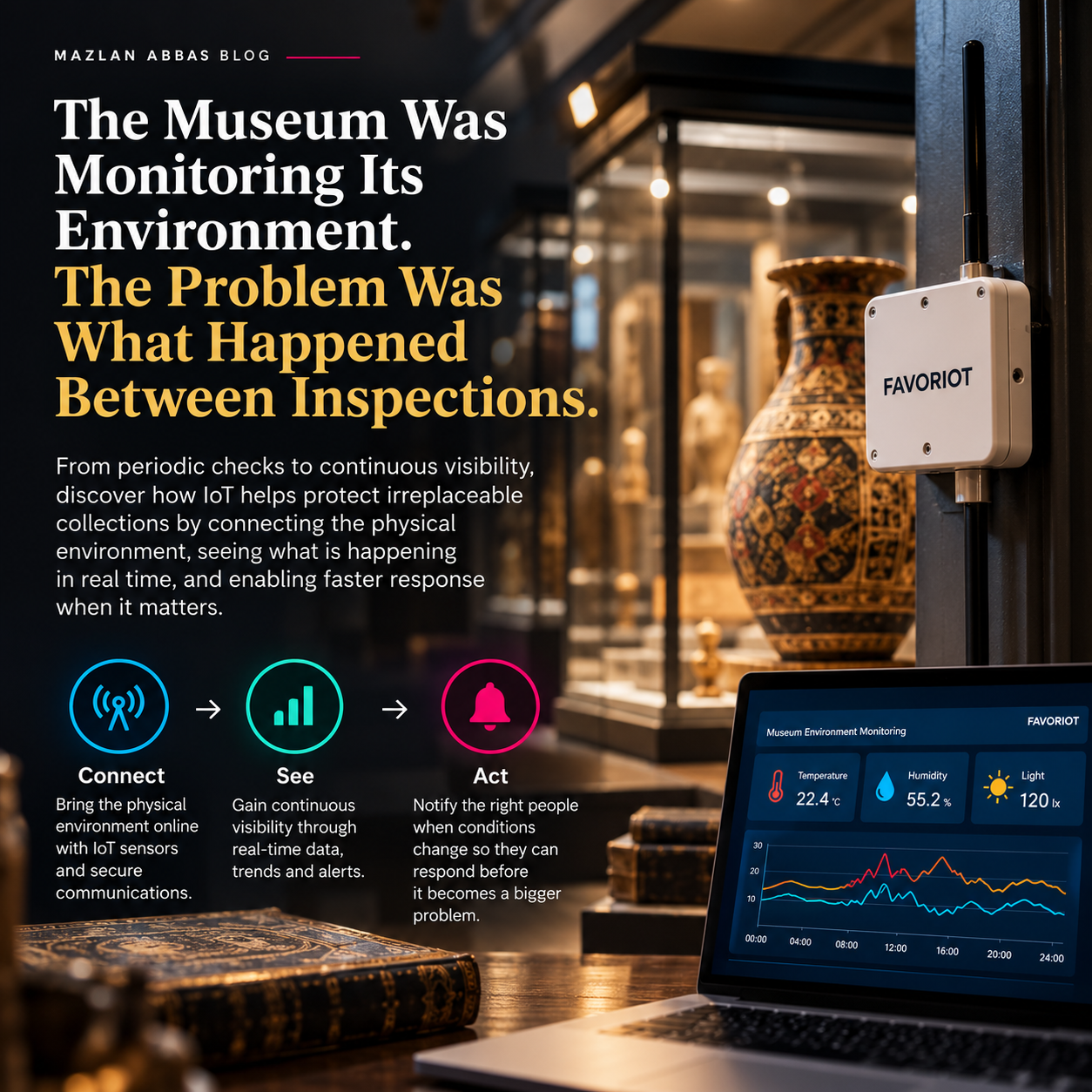
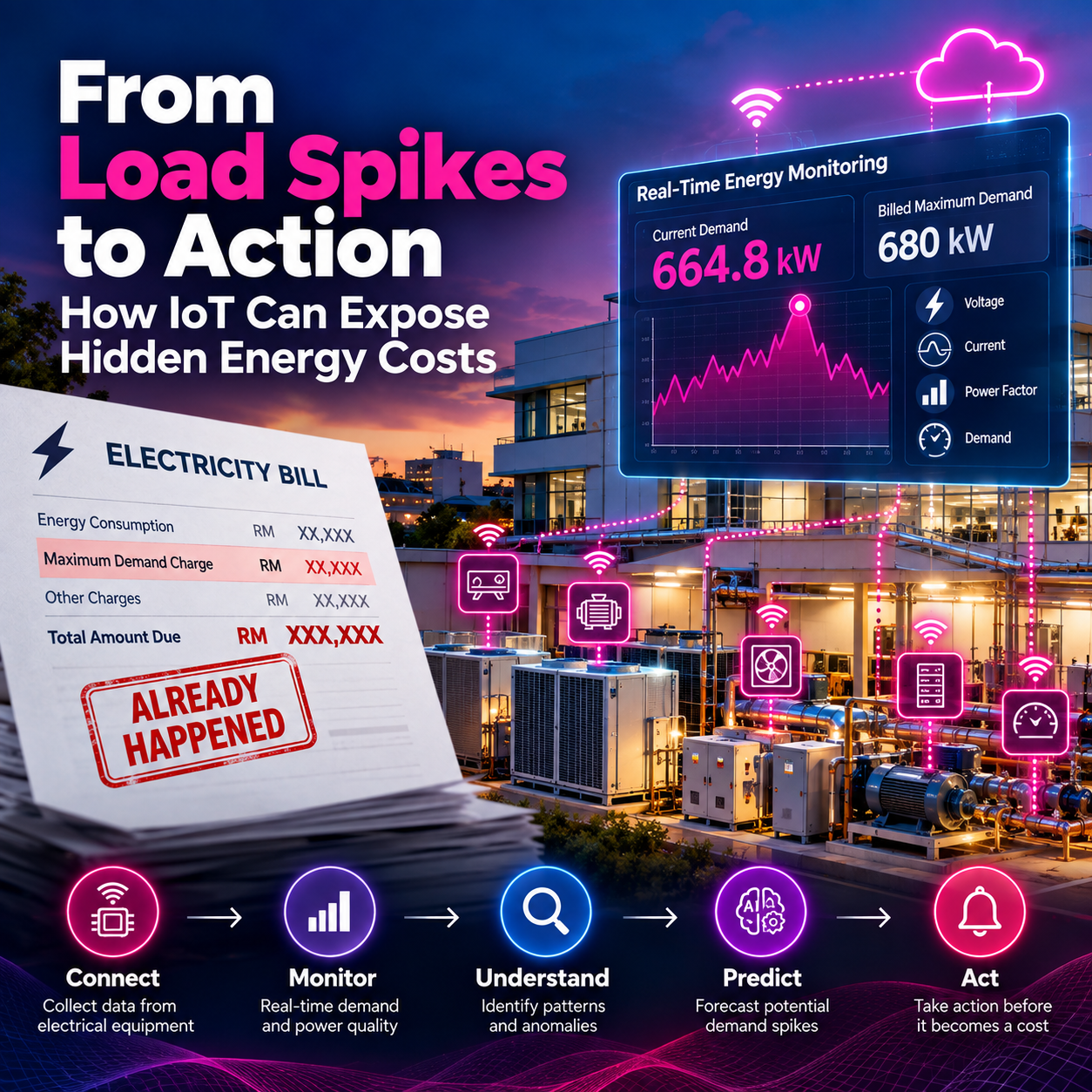
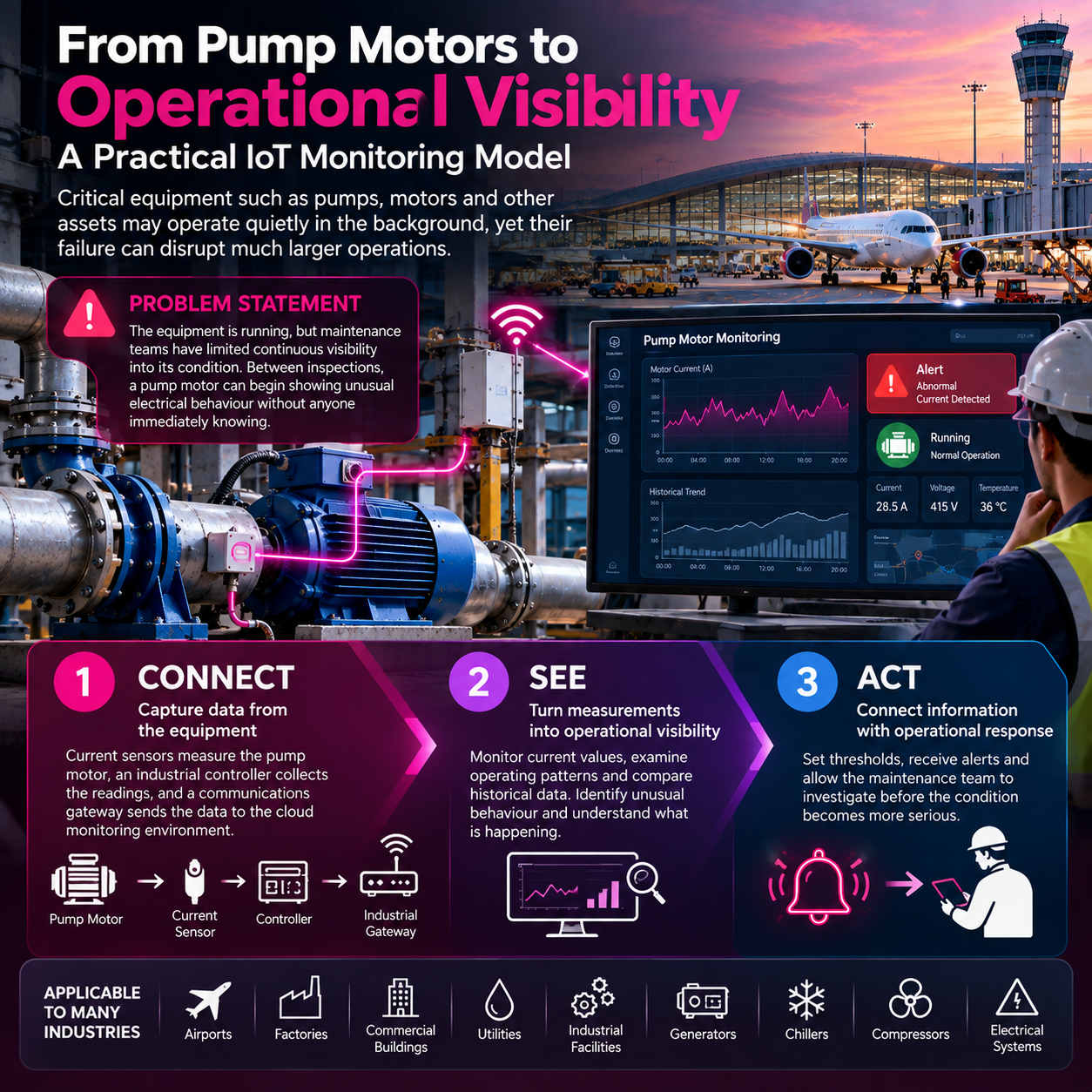
Connect the data. See what is actually happening. Act with confidence and speed. The gap between knowing this sequence and actually closing it is precisely where Operational Blindness persists.
What Comes Next
This is the opening article in a series examining Operational Blindness from six distinct vantage points. Each subsequent piece focuses on a single role in the IoT value chain, exploring the specific form of blindness that role experiences, the real costs it carries, and what a credible path toward clarity looks like in practice.
Because the first step toward solving any version of Operational Blindness is understanding clearly which version you are actually dealing with.

Leave a Reply