

I’ve been in the IoT game for decades. I’ve seen it evolve from a buzzword into an essential part of digital transformation. But as I look around Southeast Asia today, across Malaysia, Indonesia, Thailand, Vietnam, and our ASEAN neighbours, I’m struck by a glaring absence.
Why are we still relying so heavily on foreign IoT platforms to power our smart cities, factories, and schools?
Where is our own IoT backbone?
And I don’t mean a pilot project or a white-labeled dashboard. I’m talking about a full-fledged ASEAN-grown platform—built by us, for us.
Let me explain why we can no longer afford to ignore this.
1. Digital Sovereignty Isn’t Just a Slogan
We talk a lot about “digital independence.” But sovereignty isn’t about waving flags—it’s about control.
Right now, much of our IoT data flows through platforms hosted in the US, Europe, or China. That means our traffic patterns, factory efficiency, energy usage, and even school attendance data are being transmitted and stored in places we don’t govern.
“But it’s just data,” some might argue.
No. It’s the lifeblood of our future industries. Data is the new oil—and we’re giving away the wells.
If ASEAN wants to lead in Industry 4.0, we must own our IoT infrastructure, not just lease it.
2. Our Needs Are Not the Same as the West
Let’s be real. A farmer in Kelantan doesn’t need the same IoT solution as a logistics firm in Germany. A smart city in Jakarta faces different traffic and pollution dynamics than one in Los Angeles.
Yet, the dominant IoT platforms are built with Western infrastructure, standards, and market assumptions in mind.
We need systems that:
- Speak our languages (Bahasa, Thai, Tagalog…)
- Adapt to intermittent 3G/4G in rural areas
- They are affordable for SMEs, not just multinationals
- Comply with our data policies and our regulations
An ASEAN-built platform can be rooted in regional realities. It can reflect our diversity, not treat it as a bug.
3. The Platform is the Power
People often forget that platforms don’t just host innovation—they control it.
We’re dependent when we build smart city apps, digital health trackers, or smart agriculture tools on foreign platforms. We have no say in whether those platforms change pricing, features, or policies.
“What if they pull the plug tomorrow?”
I’ve had government agencies and universities share this exact fear with me.
Building our own platform puts the power back in our hands. It allows ASEAN developers to innovate freely, without fear of ecosystem lock-in or sudden shutdowns.
4. This is Our Opportunity to Leapfrog
Let me share a story.
In the early 2000s, Africa didn’t have extensive fixed-line telephony. But it didn’t try to catch up—it leapfrogged straight to mobile.
ASEAN can do the same with IoT.
We don’t need to replicate the complex legacy systems of the West. We can build leaner, more modular, cloud-native platforms tailored for our SMEs, our smart towns, our climate.
And we can do it faster and cheaper—if we stop waiting for outsiders to deliver it.
5. ASEAN is Not a Consumer Market Anymore—It’s a Creator Market
Just look around.
Startups in Ho Chi Minh City are building edge devices. Researchers in Penang are working on LoRa-based sensor networks. Universities in Bangkok are developing AIoT models for flood prediction.
We have the talent and the market, and now we need the platform.
Building our IoT backbone isn’t just a tech decision—it’s a strategic move to elevate our regional innovators from users to creators.
So, What Does an ASEAN IoT Backbone Look Like?
Let me paint a vision.
- Hosted locally in multiple ASEAN countries, with data sovereignty respected
- Interoperable, using open standards so sensors from the Philippines can talk to gateways in Vietnam
- Multi-lingual dashboards and alerts for broader accessibility
- Customizable pricing models that allow students, SMEs, and governments to scale with ease
- Developer-friendly APIs, SDKs, and community support
- Training academies across ASEAN to grow our next-gen IoT builders
Sounds ambitious? It is.
But it’s not impossible. Some of us have already started laying the foundation.
What’s Holding Us Back?
Not much—except mindset.
Some governments are still hesitant to fund local platforms, some corporations still assume Western tools are “better, ” and some universities don’t yet embed ASEAN-born platforms into their curriculum.
“We don’t want to reinvent the wheel,” they say.
But here’s the thing: we’re not reinventing. We’re reclaiming.
Reclaiming our ability to build. To adapt. To innovate for our people.
Let’s Build This Together
If you’re a policymaker—consider incentivizing local IoT platforms.
If you’re in academia, start teaching with regional tools, not just imported ones.
If you’re an engineer, contribute to ASEAN-based IoT standards.
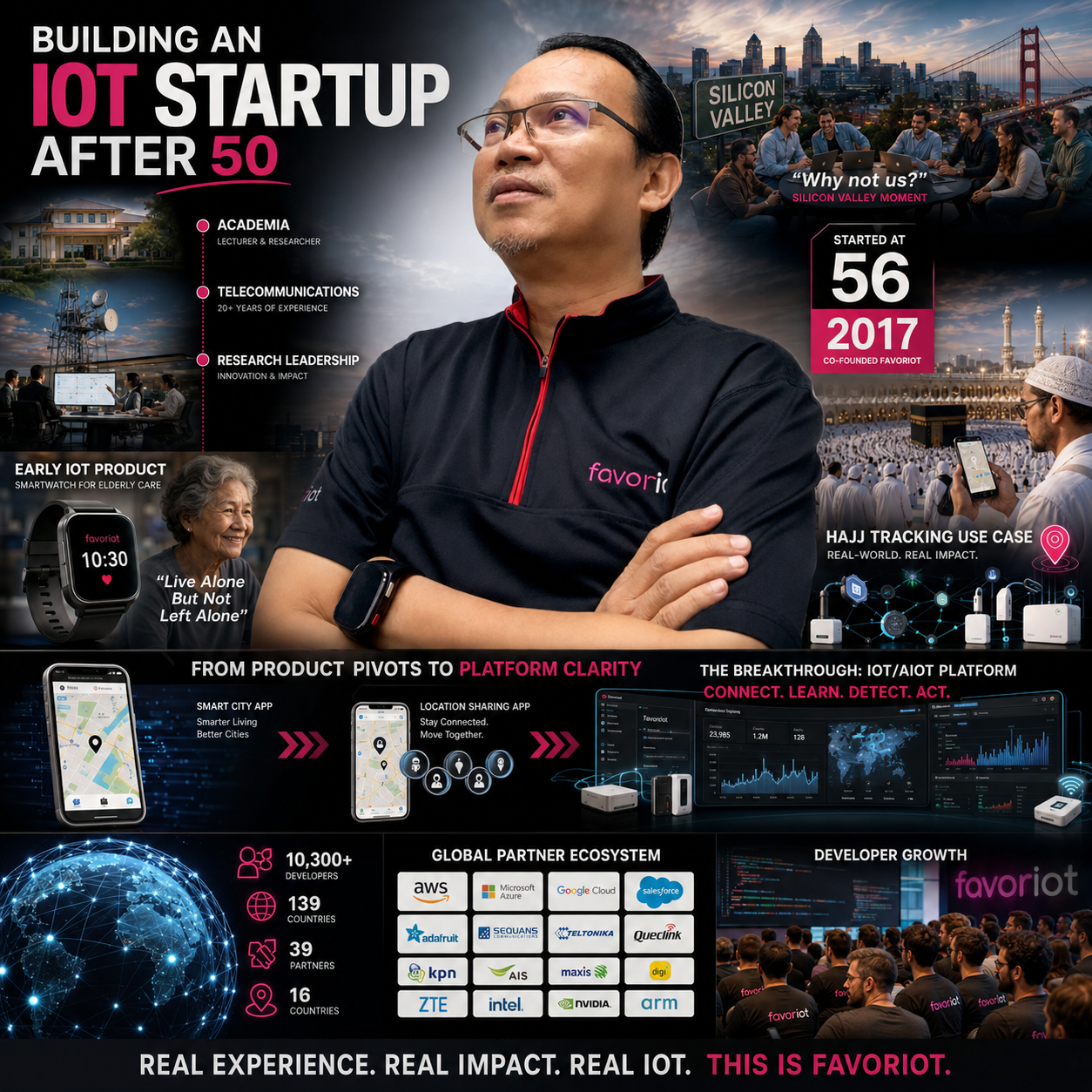
And if you’re a startup founder like me, trying to compete in a world dominated by AWS IoT and Azure, don’t give up. Your work matters. You’re building the floor others will one day stand on.
I’m tired of hearing “why can’t we do what Europe is doing?”
We can. We must. And more importantly, we must do it our way.
The time to build ASEAN’s IoT backbone is not five years from now. It’s now.
Let’s stop waiting for permission.
Let’s build.



Leave a Reply