

In recent years, artificial intelligence has taken centre stage in almost every technology conversation. Generative AI, machine learning, intelligent automation, and copilots dominate boardroom discussions, conference agendas, and funding priorities. The enthusiasm is understandable. AI has reached a level of accessibility and maturity that allows almost anyone to experience its capabilities firsthand.
Yet beneath this surge of attention lies a quieter reality that deserves renewed focus.
AI does not exist in isolation. In the physical world, its effectiveness depends heavily on the quality, consistency, and continuity of data generated by connected systems. That data, more often than not, comes from the Internet of Things.
This article examines why IoT remains fundamental, how AI has changed expectations, and why organisations must rebalance their approach to achieve intelligence that lasts beyond demos and dashboards.
From Novelty to Infrastructure

More than a decade ago, IoT was still viewed as a niche or experimental concept. Early discussions focused on sensor networks, low-power connectivity, and the challenge of enabling devices to communicate reliably. At that stage, much of the effort went into awareness and education. Many organisations were still trying to understand what IoT actually meant for them.
Over time, IoT matured. Sensors became cheaper and more reliable. Connectivity options expanded. Cloud platforms simplified data ingestion and visualisation. Gradually, IoT shifted from a headline topic to an integral part of operational infrastructure.
That transition is precisely why IoT feels less visible today. When technology works quietly in the background, it stops attracting attention. AI, by contrast, announces itself. It writes, speaks, generates images, and produces immediate, tangible outputs that are easy to showcase.
The risk is not that AI is advancing too quickly. The risk is that IoT is being taken for granted.
The Data Reality Behind Intelligent Systems
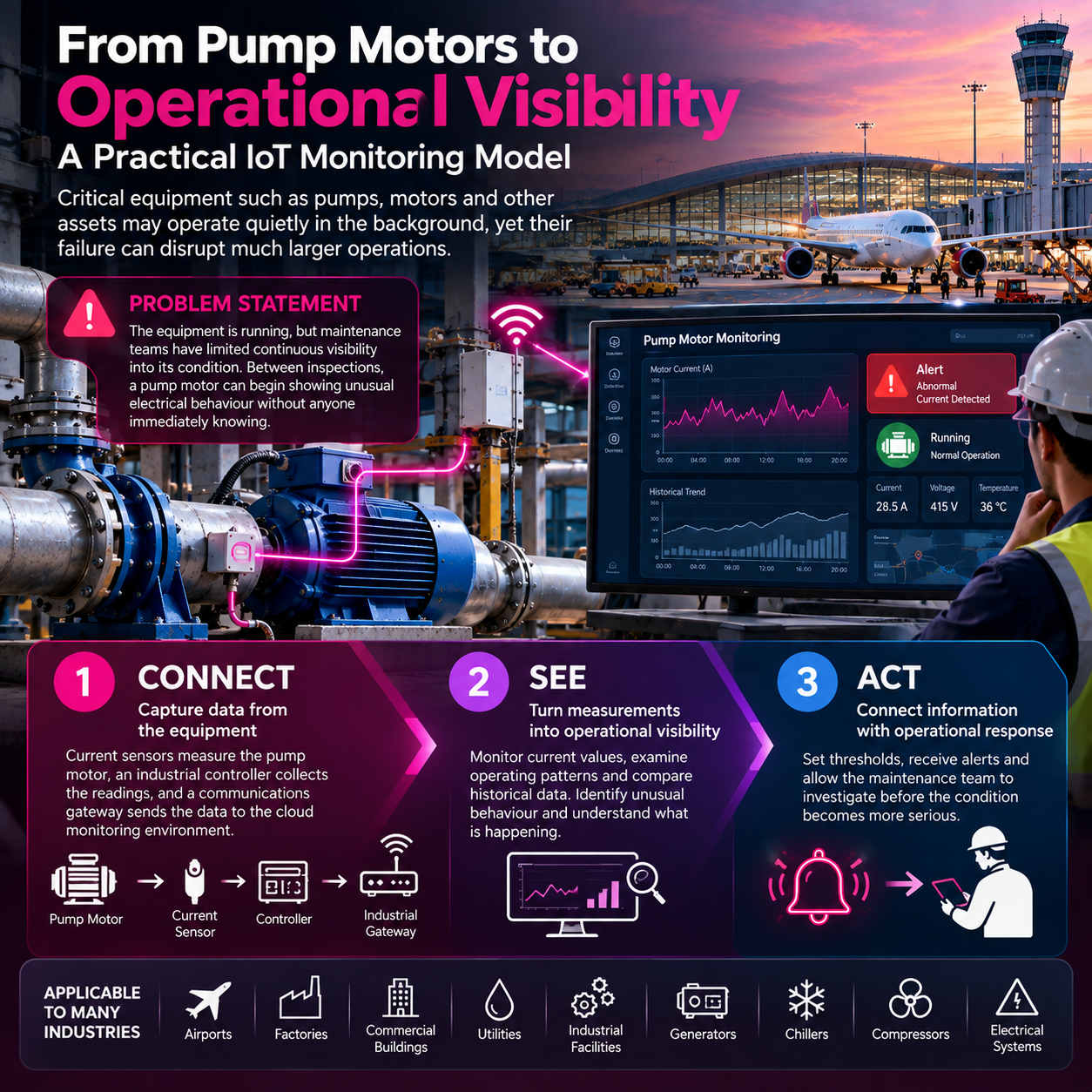
Many of the intelligent capabilities organisations aspire to rely on a specific type of information: time-based data from the physical environment. Energy consumption, temperature changes, vibration patterns, traffic flow, equipment usage, and environmental conditions. These signals describe how the real world behaves over time.
AI models do not create this data. They consume it.
For machine learning to identify anomalies, it must first understand what normal looks like. For predictions to be credible, historical data must be of sufficient volume and quality. For automated decisions to be trusted, the underlying data pipeline must be stable and transparent.
This is where many initiatives struggle. Expectations for AI are often set without a realistic assessment of data readiness. Organisations want intelligent outcomes before investing in instrumentation, data continuity, and governance.
In practice, intelligence cannot be switched on instantly. It is built gradually, starting with reliable data collection.
Dashboards and the Illusion of Insight
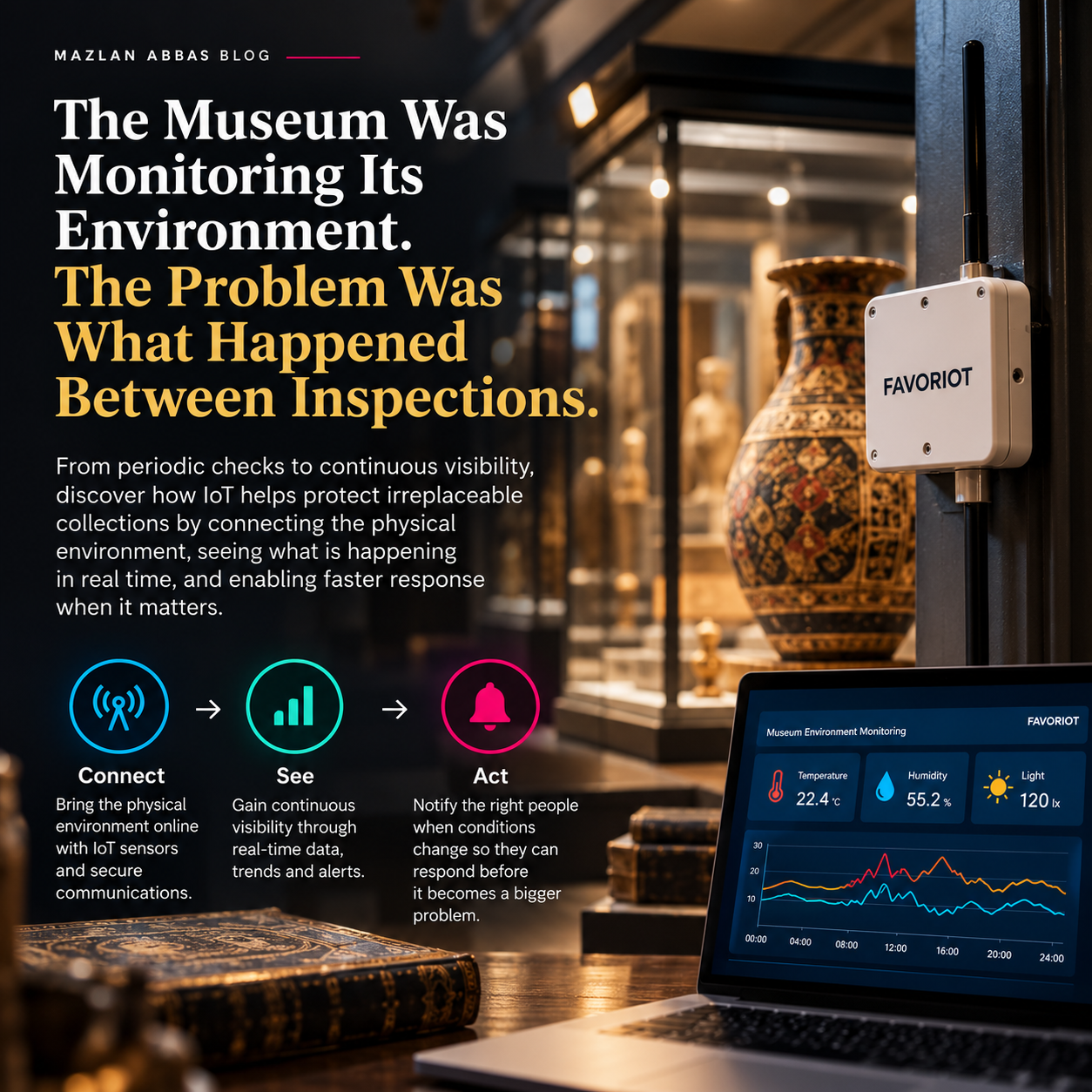
IoT deployments frequently begin with dashboards. Visualisation is a natural first step. It provides visibility and reassurance that data is being captured.
However, dashboards alone do not create understanding.
Descriptive views show what has already happened. They rarely explain why it happened or what should be done next. When decisions are still driven by static thresholds and manual interpretation, the system remains reactive rather than intelligent.
To progress beyond this stage, organisations must introduce analytical depth. This includes identifying patterns, establishing baselines, detecting deviations, and classifying conditions. These capabilities bridge the gap between visibility and insight.
AI and machine learning play an important role here, but only when applied to well-defined datasets with clear objectives.
The Shift Toward Edge Intelligence
One of the most meaningful developments in recent years is the move toward processing intelligence closer to where data is generated.
Not every decision needs to be sent to the cloud. In many scenarios, latency, reliability, privacy, and safety requirements demand local processing. Edge intelligence enables trained models to run directly on devices or gateways, delivering faster, more resilient responses.
This approach also forces more disciplined system design. Teams must decide which logic should reside at the edge, which analytics should be aggregated centrally, and when humans should remain in the decision loop.
Rather than replacing human judgment, well-designed AIoT systems support it, providing timely context and recommendations without removing accountability.
Why IoT Still Matters More Than Ever
The current enthusiasm for AI has unintentionally pushed IoT into the background of many strategic discussions. This is a mistake.
AI amplifies the value of IoT, but it cannot substitute for it. Without sensors, there is no signal. Without continuity, there is no learning. Without context, there is no trust.
Organisations that focus only on adding AI labels to existing systems risk building fragile solutions that perform well in demonstrations but fail under real-world conditions.
Those that invest patiently in data foundations position themselves to benefit from AI in a way that is sustainable and credible.
Building Systems That Endure
A mature approach to AIoT recognises that intelligence is a journey rather than a feature. It starts with instrumentation, progresses through understanding, and eventually enables confident decision-making, whether automated or human-led.
Platforms that support this journey quietly, without forcing premature complexity, play an important role in helping teams grow capability over time. This philosophy underpins many modern IoT platforms, including Favoriot, which emphasises building robust data pipelines before pursuing advanced analytics.
A Practical Call to Action
For organisations navigating the AI surge, a few principles are worth keeping in mind:
- Assess data readiness before committing to intelligent outcomes
- Strengthen IoT foundations with consistent, high-quality data collection
- Move beyond descriptive dashboards toward analytical understanding
- Apply AI with clear intent, grounded in operational reality
- Design systems that balance automation with human oversight
AI will continue to evolve rapidly, and its influence will only grow. But its real-world impact will depend on how well organisations respect and strengthen the IoT foundations beneath it.
The future belongs not to those who chase intelligence the fastest, but to those who build systems that still make sense years after the excitement fades.



Leave a Reply