
![[Whitepaper] Establishing AIoT-Driven Operational Intelligence Across Public Infrastructure](https://iotworld.co/wp-content/uploads/2026/02/image-5.png)
A Policy Framework for Real-Time Governance, Accountability, and National Resilience
Executive Summary
Public sector institutions today manage increasingly complex infrastructure systems: transportation networks, public facilities, utilities, environmental monitoring systems, healthcare assets, and safety infrastructure. These systems generate large volumes of operational data. Yet in many jurisdictions, this data remains fragmented, reactive, and underutilised.
Artificial Intelligence of Things (AIoT) provides a structured pathway to modernise public infrastructure management. By integrating connected devices, real-time data analytics, and secure digital platforms into a unified operational intelligence layer, governments can significantly improve service delivery, reduce waste, enhance transparency, and strengthen regulatory oversight.
This paper outlines a policy-aligned approach to deploying AIoT across public infrastructure and explains how a national AIoT framework can support long-term digital sovereignty, fiscal responsibility, and citizen trust.
The Public Sector Visibility Challenge
Governments face mounting expectations to deliver efficient, safe, and accountable services. However, operational oversight is often constrained by:
- Manual reporting mechanisms
- Siloed departmental systems
- Delayed detection of infrastructure failures
- Limited cross-agency data integration
- Resource constraints in maintenance and inspection
The result is:
- Prolonged downtime in public facilities
- Inefficient energy and resource consumption
- Delayed response to incidents
- Inconsistent compliance documentation
- Limited predictive planning capability
While digital transformation initiatives are underway in many regions, the absence of an integrated operational intelligence layer prevents data from translating into timely decisions.
AIoT as a National Infrastructure Enabler
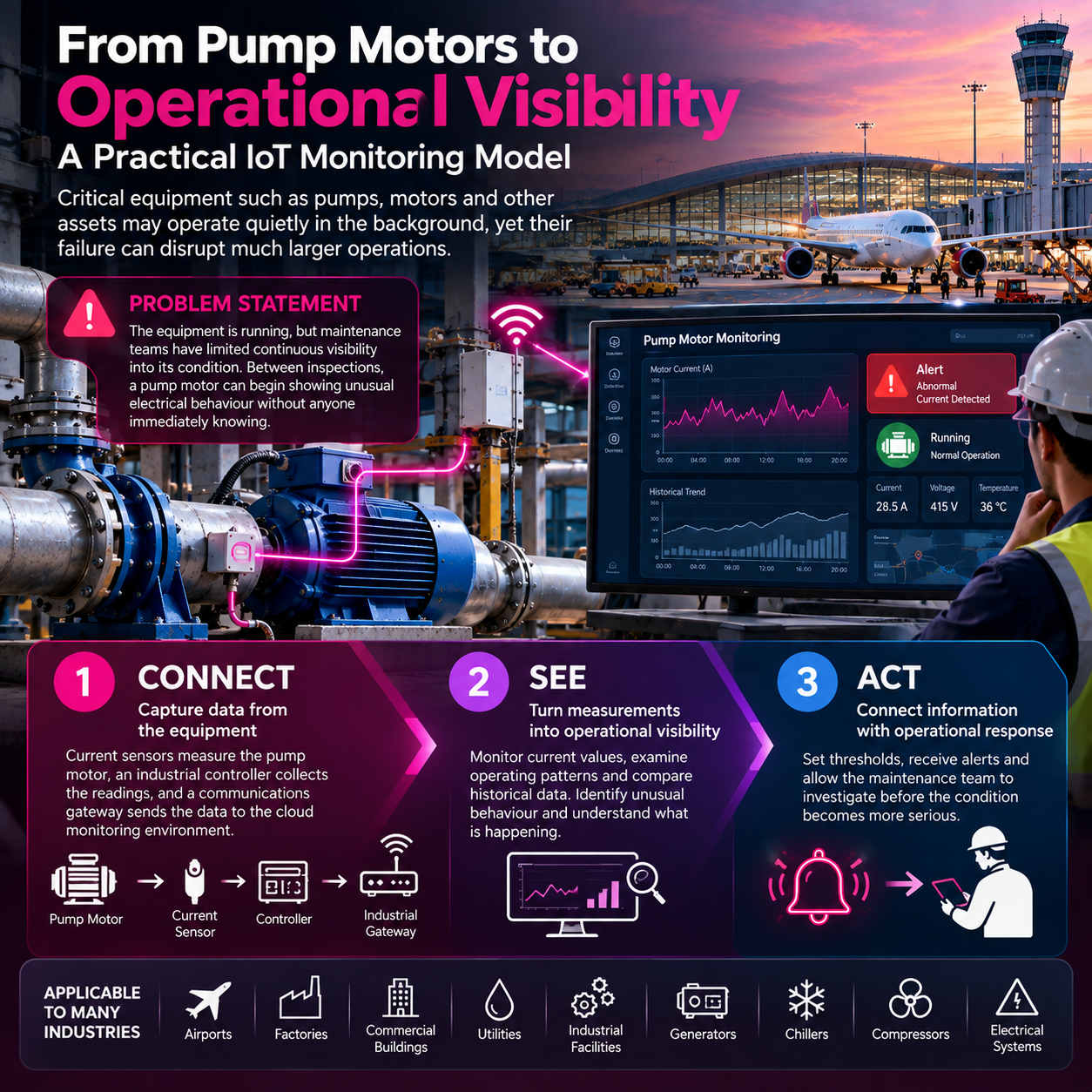
AIoT introduces a structured model for connecting physical infrastructure with digital intelligence. Rather than isolated monitoring systems, AIoT creates a unified environment where assets communicate continuously and automatically.
For governments, this means:
1. Real-Time Infrastructure Monitoring
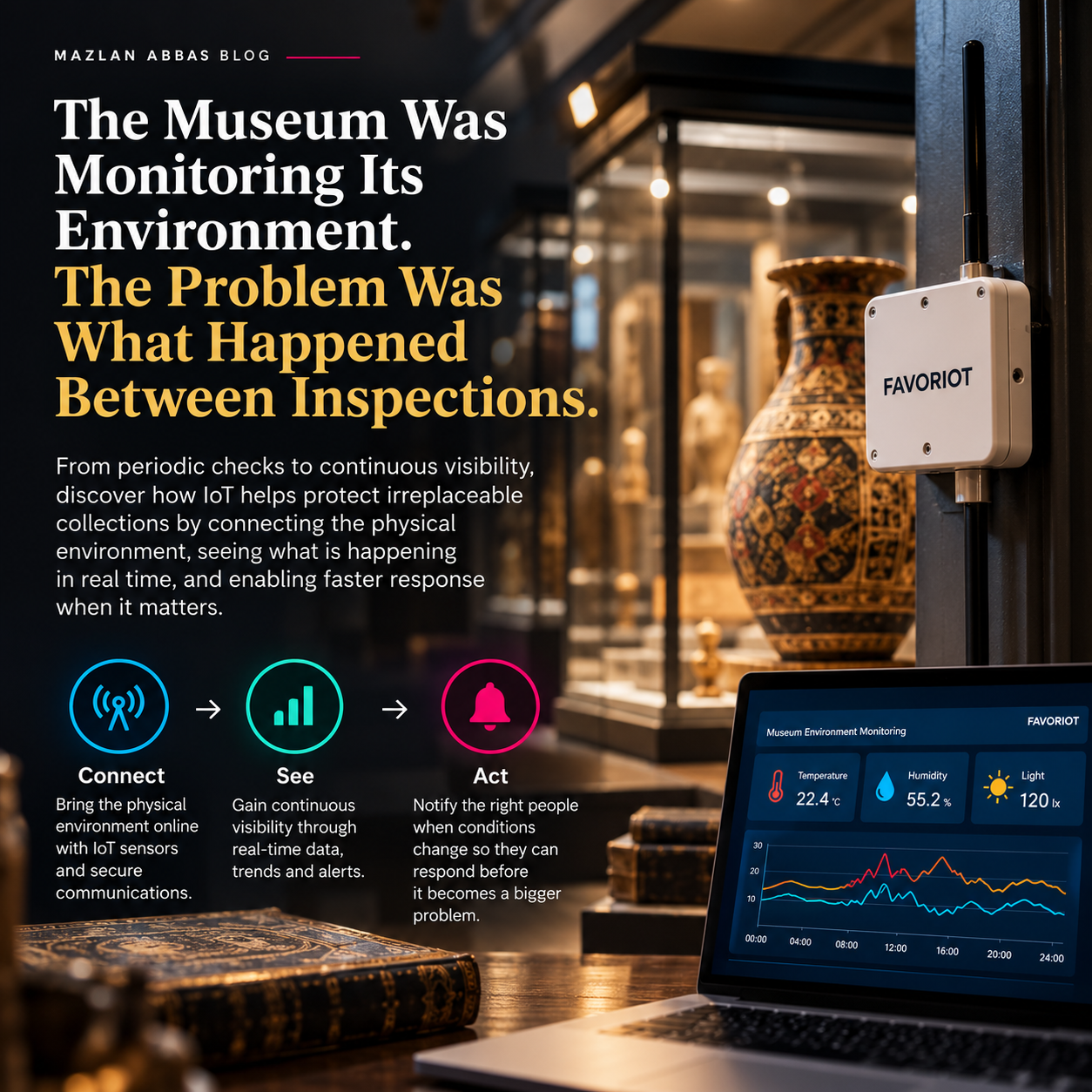
Public assets such as lifts, energy systems, water infrastructure, environmental sensors, and transport systems can be monitored continuously rather than through periodic inspections.
2. Automated Incident Detection and Escalation
Predefined rules enable rapid alerts and coordinated responses across departments, reducing reliance on manual reporting.
3. Data-Driven Regulatory Compliance
Structured data capture supports audit readiness and simplifies reporting to regulatory bodies.
4. Predictive Maintenance and Resource Optimisation
Pattern recognition and analytics allow agencies to shift from reactive maintenance to planned intervention models.
This capability strengthens governance efficiency while improving public service reliability.
Policy Alignment and Strategic Outcomes
A national AIoT framework aligns directly with government priorities in several key areas:
Digital Governance and Public Sector Modernisation
AIoT strengthens the digital backbone of ministries and local councils, enabling measurable service performance.
Fiscal Responsibility and Budget Efficiency
Reduced unplanned maintenance, lower energy waste, and optimised asset lifecycle management translate into more predictable budget planning.
Public Safety and Risk Mitigation
Continuous monitoring reduces the likelihood of catastrophic infrastructure failures and improves incident response coordination.
Environmental Sustainability
Real-time energy and environmental monitoring supports national sustainability targets and emissions reduction commitments.
Data Sovereignty and National Capability
Deploying locally governed AIoT platforms ensures sensitive public infrastructure data remains under appropriate jurisdictional control.
Implementation Framework for Government Agencies
To ensure a successful deployment, a phased, policy-driven approach is recommended.
Phase 1: Asset Prioritisation
Identify high-impact infrastructure categories, including public buildings, transport nodes, utilities, and safety-critical systems.
Phase 2: Pilot Deployment
Deploy AIoT monitoring in selected sites to validate performance metrics, cost savings, and operational improvements.
Phase 3: Standardisation and Governance
Establish national interoperability standards, cybersecurity requirements, and data governance policies.
Phase 4: Scaled Rollout
Expand implementation across ministries and local authorities with central oversight and shared best practices.
Platform Capability: Enabling Secure and Scalable AIoT Deployment
A national AIoT initiative requires a secure and scalable digital backbone. Platforms such as Favoriot provide the following foundational capabilities:
- Secure device connectivity across distributed public assets
- Centralised dashboards for cross-agency visibility
- Automated alerts and rule-based responses
- Analytics tools to support predictive planning
- Integration with existing government IT infrastructure
This ensures that AIoT deployment does not require replacing legacy systems but instead enhances them with real-time intelligence.
Measurable Public Sector Impact
Government agencies implementing AIoT-based operational monitoring can expect measurable improvements in:
- Reduction of reactive maintenance expenditure
- Faster detection and resolution of infrastructure faults
- Improved transparency in regulatory reporting
- Enhanced public service reliability
- Greater cross-department coordination
Over time, AIoT adoption strengthens institutional capacity and builds a foundation for Smart City and national digital initiatives.
Governance Considerations
Successful AIoT deployment in the public sector requires:
- Clear data ownership policies
- Defined cybersecurity standards
- Interoperability frameworks
- Central coordination units for cross-agency oversight
- Capacity-building programs for public officers
AIoT should be treated as critical digital infrastructure, not as an isolated technology project.
Conclusion
Governments are increasingly expected to deliver transparent, responsive, and accountable public services. Without real-time operational visibility, achieving these outcomes remains challenging.
AIoT offers a policy-aligned mechanism to modernise public infrastructure oversight, reduce waste, strengthen compliance, and enhance citizen trust.
By establishing a structured national AIoT framework supported by secure, scalable platforms, governments can transition from reactive management to proactive governance.
Operational intelligence is not merely a technical upgrade. It is a governance capability.



Leave a Reply