

On 21 June 2026, UC TATI hosted an Industry Talk by Dr. Mazlan Abbas, Adjunct Professor and CEO of Favoriot Sdn Bhd, at Dewan Ibnu Sina. The session, organised by the Faculty of Engineering Technology, brought together students and academic staff from FTK and FKMPT, with the presence of Prof. Ir. Dr. Hairul Azhar Abdul Rashid.
The programme was part of the strategic collaboration between UC TATI and Favoriot Sdn Bhd to strengthen the connection between academia and industry. Beyond exposing students and lecturers to current developments in the Internet of Things, the session also supported curriculum review efforts to ensure IoT-related courses remain relevant to industry needs.
The talk carried the theme “IoT Across Fields: Trend, Applications and Future Direction.” It reflected Dr. Mazlan’s long experience in academia, telecommunications, research, industry leadership, and entrepreneurship. As an Adjunct Professor, his role was not only to share technical knowledge, but also to help students and lecturers see how IoT, AI, and AIoT can be applied to real operational problems.

From IoT Awareness to Operational Value
Dr. Mazlan began by positioning IoT as more than a technology for connecting sensors and devices. In many organisations, devices are already installed, dashboards are already available, and data is already being collected. Yet the real challenge is no longer simply about seeing data.
The larger question is whether people know what to do with that data.
This message was one of the central ideas of the talk. IoT must move beyond basic connectivity and become a tool for better decisions. A sensor can measure temperature, humidity, current, water level, vibration, air quality, or movement. A dashboard can show graphs and alerts. But unless the data helps someone act faster, respond better, reduce risk, or improve operations, the system remains incomplete.
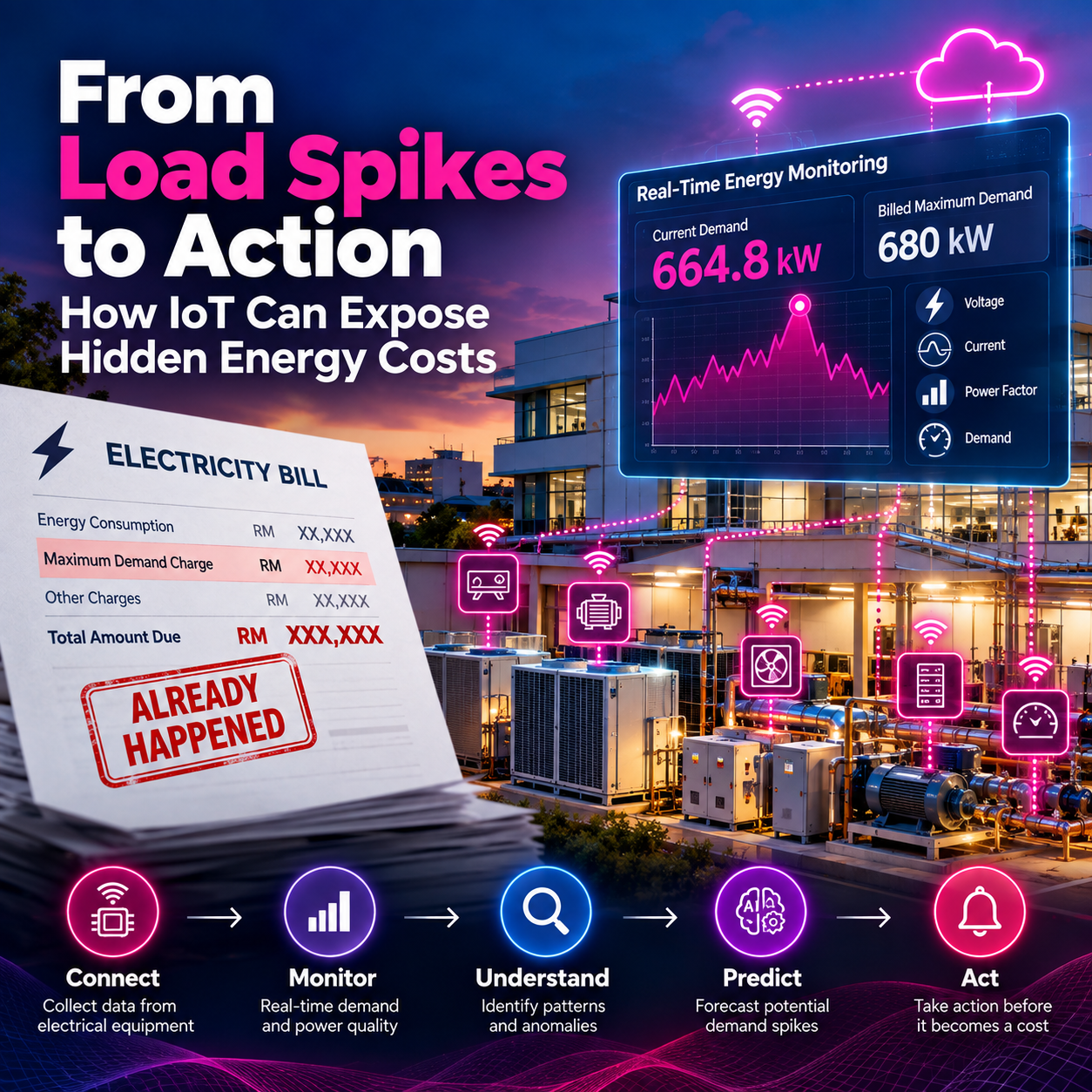
Dr. Mazlan explained that many organisations today are “drowning in data but starving for context.” They may have many sources of data, but the data is often isolated. The value of IoT appears when data answers specific operational questions. For example, is the room temperature safe for museum artefacts? Is a remote network failure caused by power loss? Is a river level rising to a dangerous point? Is the energy demand moving toward a costly peak?
This shift from data collection to decision-making is especially important for students. It encourages them to think not only as engineers who build systems, but also as problem-solvers who understand users, operations, and outcomes.
Introducing AIoT as the Next Step
The talk also covered AIoT, which combines Artificial Intelligence and the Internet of Things. Dr. Mazlan highlighted that AIoT is not about adding AI for the sake of trend-following. Rather, it is about helping systems learn from data, detect patterns, identify anomalies, and support decisions with better accuracy.
In a traditional IoT setup, sensors collect data and send it to a platform. Users then monitor dashboards and take action manually. In AIoT, the system becomes more intelligent. It can learn from past behaviour, detect unusual events, predict future issues, and trigger alerts or workflows.
Dr. Mazlan presented AIoT as a progression from visibility to foresight. IoT helps organisations see what is happening. AIoT helps them ask what may happen next and what should be done about it.
This distinction is important for engineering students because many future systems will not stop at monitoring. Industries will expect graduates to build systems that can support predictive maintenance, energy savings, safety alerts, environmental control, smart agriculture, healthcare monitoring, smart city operations, and industrial automation.
Edge and Cloud Intelligence
Another important part of the talk was the discussion on where intelligence should reside in an AIoT system. Dr. Mazlan explained the difference between edge intelligence and cloud intelligence.
Edge intelligence refers to processing data close to where it is generated, such as on devices, gateways, or local servers. This is useful when fast response is needed. For example, an industrial machine may need immediate shutdown when an unsafe condition is detected. A remote site may need local alerts even when internet connectivity is unstable.
Cloud intelligence, on the other hand, is useful for large-scale analytics, long-term trends, historical comparisons, and model training. It can combine data from many sites and provide a broader view of operations.
Rather than treating edge and cloud as competing choices, Dr. Mazlan encouraged the audience to see them as complementary. The edge can act like the reflex system, responding quickly to immediate situations. The cloud can act like the brain, analysing wider patterns and improving decisions over time.
This idea is highly relevant for lecturers designing IoT and AIoT courses. Students should not only learn how to send data to the cloud. They should also understand latency, privacy, bandwidth cost, resilience, local processing, and distributed system design.
The Favoriot Platform as a Learning and Development Tool
Dr. Mazlan also introduced the Favoriot IoT Platform as an enabling tool for students, lecturers, and project teams. The platform supports device connectivity, data storage, dashboards, rules, alerts, and APIs. It allows users to connect sensors, collect data, build dashboards, detect events, and take action.
The talk described a practical flow: connect, learn, detect, and act. This simple structure helps students understand the full IoT development cycle. First, devices must connect. Next, data must be collected and organised. Then, the system must detect patterns or events. Finally, action must be taken through alerts, reports, workflows, or automation.
By using a platform-based approach, students can focus more on solving real problems instead of spending too much time rebuilding basic infrastructure from scratch. This can help final-year projects become more complete, more testable, and more aligned with industry expectations.
Real Applications Across Fields
The talk also shared examples of IoT and AIoT applications across different fields. These included smart cities, environmental monitoring, power monitoring, cultural heritage preservation, flood monitoring, weather monitoring, and smart retail.
In smart city operations, IoT can integrate scattered municipal data into a central command centre. Instead of each department working in isolation, data from weather stations, flood sensors, power systems, and public facilities can be viewed in a common platform. This improves coordination and response.
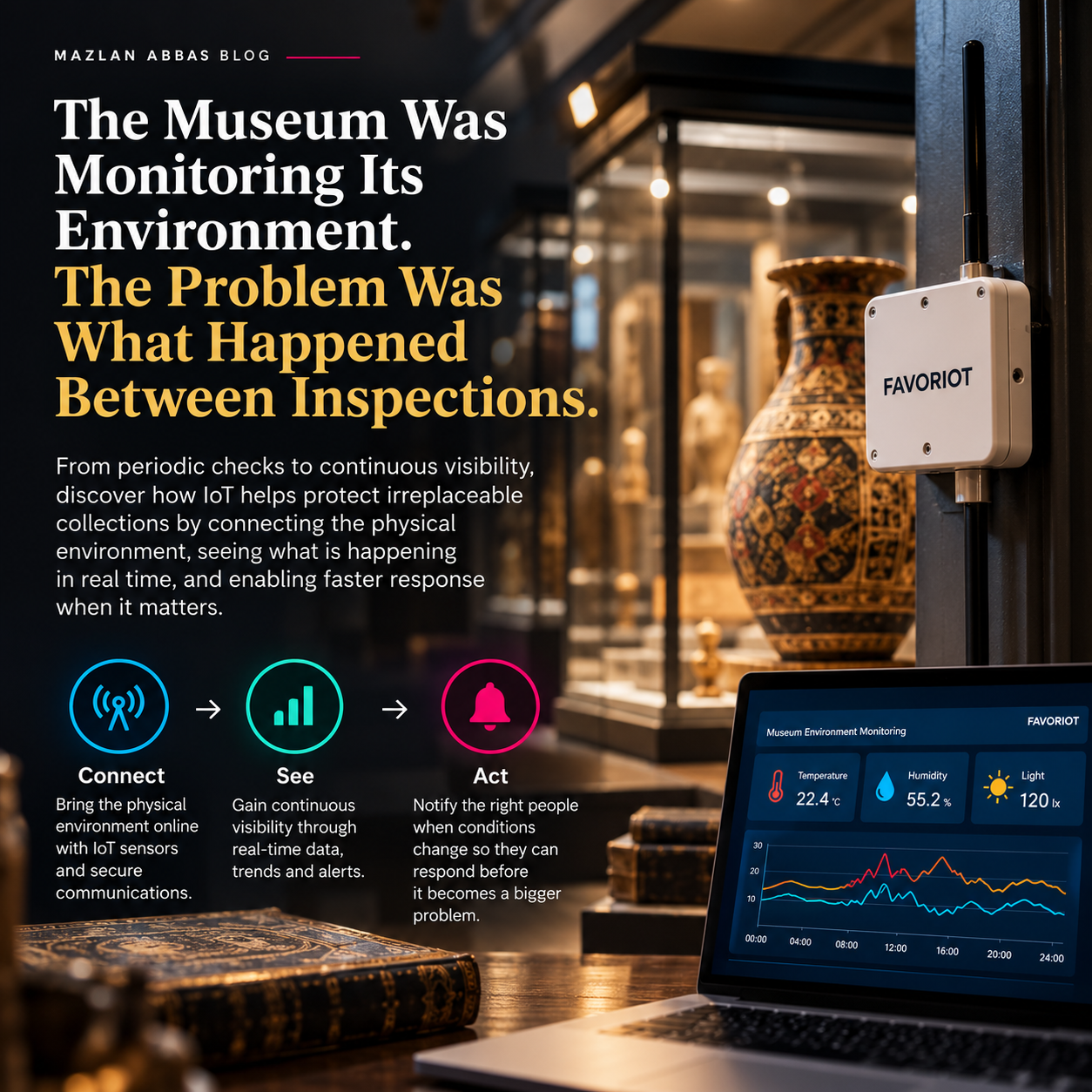
For cultural heritage preservation, environmental monitoring can help museums protect valuable artefacts. Temperature, humidity, and light levels can be tracked continuously. Alerts can be generated when conditions move beyond safe limits. This turns IoT into a protection system for national heritage.
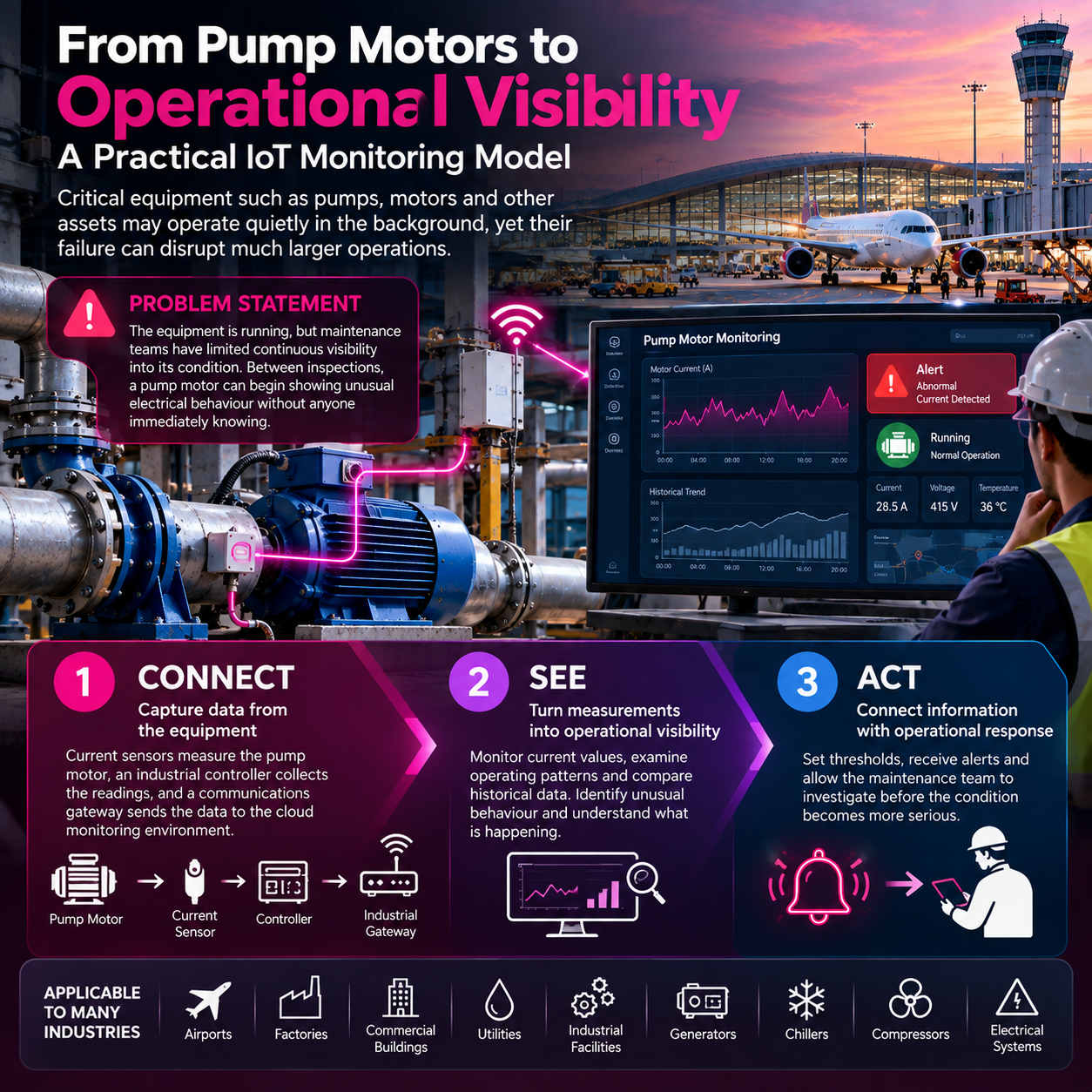
For power monitoring, IoT can help identify whether infrastructure problems are caused by electrical supply issues or network failures. This is especially useful for remote sites where teams often lose time arguing over the cause of a problem. With real-time monitoring, the responsible team can respond more quickly.
For environmental and weather monitoring, small local weather stations can provide ground-level data that is more specific than general weather forecasts. This data can support flood warning, dengue prediction, construction safety, tourism planning, campus operations, and local authority decision-making.
These examples showed students that IoT is not limited to one field. It cuts across engineering, computing, manufacturing, agriculture, healthcare, environment, logistics, education, and public services.
Project Challenges for Students and Lecturers
A key part of the session focused on project challenges that students and lecturers can develop further. Dr. Mazlan encouraged students to work on system-level projects that address real industry problems rather than only producing simple prototypes.
Among the suggested project areas were flood monitoring, weather monitoring, and smart retail. These project themes are practical because they combine sensors, connectivity, platforms, dashboards, alerts, analytics, and user needs.
For flood monitoring, students can develop systems that measure river water level, rainfall, flow rate, and local weather conditions. The system can provide early warnings to campus management, local communities, or authorities. A stronger version of the project can include AI models to identify abnormal changes and predict possible flood risk.
For weather monitoring, students can build local mini weather stations that collect data such as temperature, humidity, atmospheric pressure, rainfall, wind speed, wind direction, carbon dioxide, and particulate matter. This project can support construction sites, schools, resorts, farms, and local councils. With AIoT, the system can move beyond display and begin identifying unusual patterns.
For smart retail, students can explore people counting, shelf monitoring, indoor air quality, energy monitoring, cold storage monitoring, and customer flow analysis. Such systems can help retailers improve comfort, reduce wastage, protect products, and understand operational behaviour.
These challenges provide useful opportunities for lecturers as well. They can be shaped into final-year projects, capstone projects, lab exercises, research prototypes, grant proposals, and industry collaboration projects.
Strengthening Curriculum Through Industry Input
The session also supported UC TATI’s curriculum review process. This is an important step because technology education must remain close to industry practice. IoT courses should not only teach theory or basic microcontroller exercises. They should expose students to real device management, data pipelines, dashboards, alerts, cloud platforms, cybersecurity, analytics, and AIoT architecture.
Dr. Mazlan’s input helped highlight the skills that graduates need in the workplace. Industry does not only need graduates who can connect devices. It needs graduates who can understand problems, select suitable sensors, manage data, build useful dashboards, design alerts, interpret results, and explain outcomes to decision-makers.
This is where the connection between academia and industry becomes valuable. Universities provide strong foundations in theory, design, and research. Industry brings real constraints, real users, real budgets, and real operational pain points. When both sides work together, students gain a clearer view of how their knowledge can be applied after graduation.
Preparing Students for the AIoT Future
The talk carried a strong message for students: the future belongs to those who can connect technology with purpose. IoT and AIoT are not only technical subjects. They are tools to solve problems that affect people, organisations, cities, and industries.
Students were encouraged to develop curiosity, practical skills, and the ability to think across disciplines. A good AIoT project is not judged only by the number of sensors used or the complexity of the code. It is judged by whether it solves a real problem in a clear, measurable, and useful way.
For lecturers, the session offered a timely reminder that IoT education should continue to mature. Basic IoT skills remain important, but the next stage is to help students understand AIoT, system architecture, operational visibility, decision support, and closed-loop accountability.
Conclusion
Dr. Mazlan Abbas’ Industry Talk at UC TATI provided students and academic staff with a clear view of how IoT and AIoT are shaping the future of engineering and technology. The session connected theory with practice, technology with operations, and education with industry needs.
Through practical examples and project challenge suggestions, the talk encouraged students to build solutions that go beyond prototypes. It invited lecturers to continue strengthening IoT-related courses so that graduates are better prepared for real industry work.
The collaboration between UC TATI and Favoriot Sdn Bhd reflects the importance of bringing industry experience into the academic environment. As IoT and AIoT continue to influence many sectors, programmes like this can help students see not only what technology can do, but also why it matters.

Leave a Reply