
For more than two decades, organizations have treated data silos as one of the primary barriers to digital transformation. The logic seems obvious. If every department can share information with every other department, better decisions should naturally follow.
This belief has driven billions of dollars of investment in ERP systems, enterprise integration, APIs, cloud platforms, data lakes, and middleware. Organizations proudly announce that they have eliminated their data silos and connected previously isolated systems.
Yet despite these achievements, operational problems continue to surface. Manufacturing plants still experience unexpected downtime, water utilities continue discovering leaks after substantial losses, smart buildings waste energy despite sophisticated Building Management Systems, and logistics operators still struggle to explain delivery delays.
These examples reveal an important reality. Breaking data silos improves information sharing, but it does not automatically create operational visibility. The organization may become more connected while remaining operationally blind.
Two Different Problems
Although Data Silos and Operational Blindness are often discussed together, they represent two different challenges.
A data silo is primarily an information management problem.
Operational Blindness is a decision-making problem.
One concerns where information resides. The other concerns whether the organization understands what the information actually means.
What Are Data Silos?
Data silos exist when operational information is isolated inside departments, business units, or software applications, preventing other parts of the organization from accessing or using it effectively.
Typical examples include:
- Maintenance owns equipment history.
- Operations owns production records.
- Finance owns operational costs.
- ESG teams own sustainability data.
- IT owns infrastructure logs.
- Security teams own access records.
Each department has useful information, but each sees only part of the operational picture.
As a result, organizations spend considerable effort asking questions such as:
- Can our systems exchange information?
- Can departments access one another’s data?
- Can we integrate these applications?
- Can we build a centralized dashboard?
These are technology questions.
What Is Operational Blindness?
Operational Blindness begins after data has already been collected.
It occurs when managers, operators, engineers, or executives cannot clearly perceive what is happening, understand why it is happening, anticipate what may happen next, decide on the appropriate response, or ensure that corrective actions are carried out effectively.
This situation may occur even when every operational system is connected.
The organization possesses data.
It simply lacks operational understanding.
Data Silos Can Be Eliminated While Blindness Remains
Consider a modern manufacturing plant.
It may already operate with:
- ERP
- MES
- SCADA
- PLCs
- IoT sensors
- Maintenance Management System
- Energy Management Platform
All these systems exchange information through APIs and enterprise integration platforms.
From an IT perspective, the project is considered successful because the silos have disappeared.
Yet production managers continue asking questions like:
- Which machine is most likely to fail today?
- Which alarm deserves immediate attention?
- Why has production slowed?
- Which maintenance activity should take priority?
- Who is responsible for responding?
The organization already owns the required information.
What remains missing is the ability to combine that information into meaningful operational insight.
That is Operational Blindness.
Data Integration Solves Connectivity, Not Understanding
Many digital transformation projects stop once systems have been connected.
Success is measured by achievements such as:
- Enterprise APIs
- Cloud migration
- Data lakes
- Unified dashboards
- Centralized reporting
These accomplishments answer a technical question:
“Can we access the data?”
Operational leaders ask a completely different question:
“What should we do right now?”
That answer requires operational context rather than additional data.
Data Versus Operational Truth
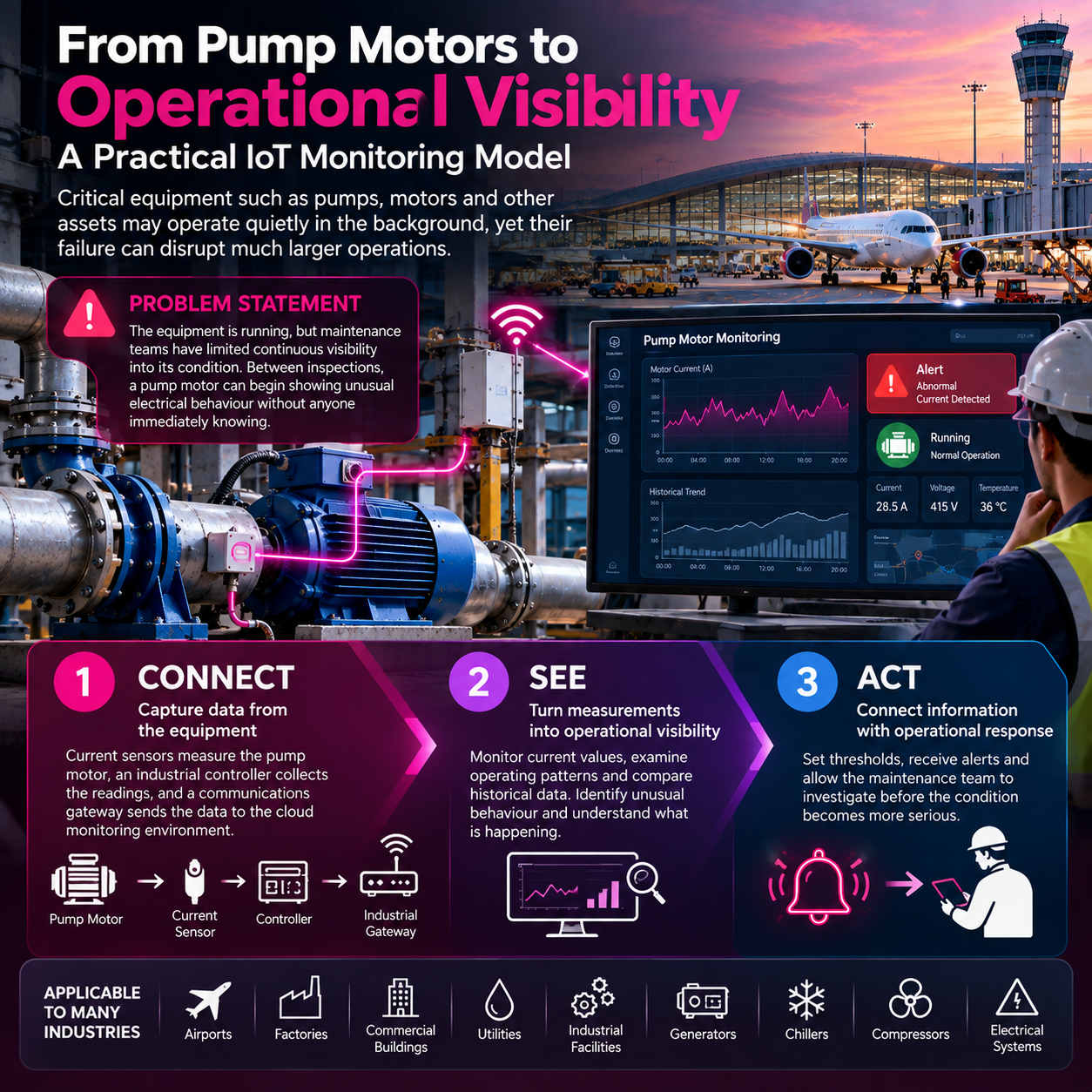
Imagine a water utility monitoring thousands of pumps.
One dashboard reports:
- Status: Running
- Pressure: 5.8 bar
- Temperature: 68°C
- Energy Consumption: 21 kW
Everything appears normal.
However, another set of information reveals that:
- Energy usage has increased gradually over three weeks.
- Vibration levels continue rising.
- Maintenance history shows repeated repairs.
- Water demand is expected to increase tomorrow.
Viewed individually, these indicators appear harmless.
Viewed together, they reveal a growing probability of equipment failure.
The dashboard displays numbers.
Operational visibility explains what those numbers mean.
Data Silos Versus Operational Blindness
| Data Silos | Operational Blindness |
|---|---|
| Focus on information sharing | Focus on operational understanding |
| Primarily a technology issue | Primarily a business and operational issue |
| Concerned with system connectivity | Concerned with decision quality |
| Solved through integration | Solved through visibility and context |
| Data is isolated | Data exists but lacks meaning |
| Measures accessibility | Measures operational awareness |
The comparison highlights an important distinction. Data silos prevent information from flowing, while Operational Blindness prevents organizations from making effective operational decisions.
Why Dashboards Frequently Fail
Many organizations believe dashboards provide visibility.
In reality, dashboards primarily answer the question:
“What happened?”
Operational visibility answers additional questions:
- Why did it happen?
- Is this normal?
- How serious is it?
- What happens if no one acts?
- Who should respond?
- Has the issue already been addressed?
Without these answers, dashboards become reporting tools rather than decision support systems.
Organizations may monitor thousands of measurements while remaining unaware of the one event capable of disrupting operations.
Building Operational Visibility
Reducing Operational Blindness requires more than integrating software systems. Organizations must combine technology, operational knowledge, and business processes to create a shared understanding of operational reality.
An effective Operational Visibility capability includes:
- Trusted operational data
- Real-time monitoring
- Business context
- Event correlation
- Situational awareness
- Decision support
- Coordinated response
- Continuous improvement
Together, these capabilities transform disconnected information into coordinated operational action.
The Connect, See, Act™ Model
Rather than ending digital transformation at data integration, organizations should establish a continuous operational cycle.
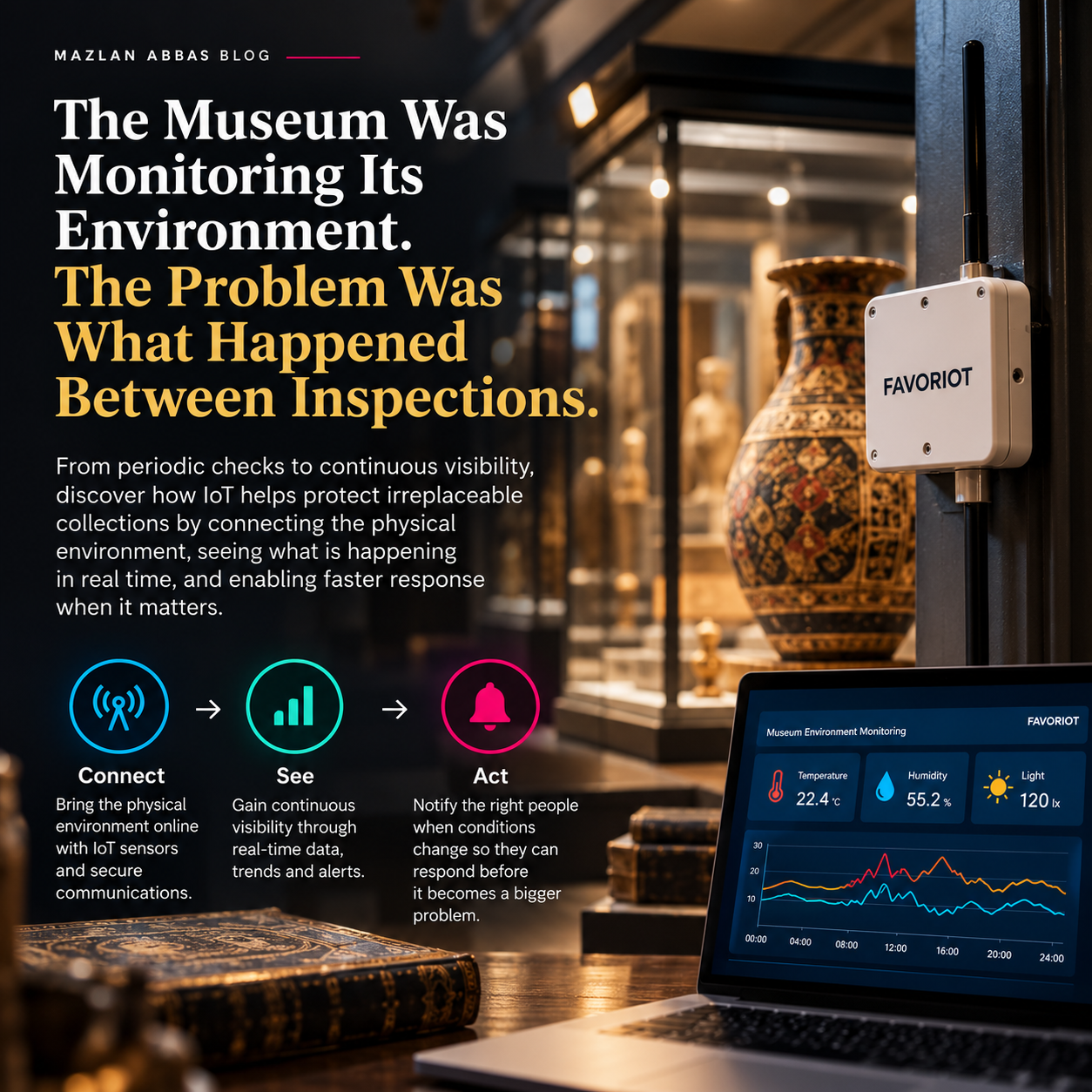
Connect
Capture trusted operational data from sensors, industrial equipment, enterprise systems, and operational applications.
See
Convert raw information into operational visibility by adding context, historical patterns, relationships, priorities, and business impact.
Act
Deliver relevant information to the right people, trigger workflows, automate responses where appropriate, verify the outcome, and continuously improve operational performance.
This creates a closed loop in which operational data continuously improves operational decisions.
Data Silos Are Only One Cause of Operational Blindness
Removing data silos is an important milestone, but it addresses only one contributor to Operational Blindness.
Other common causes include:
- Poor data quality
- Delayed reporting
- Missing operational context
- Alert fatigue
- Fragmented workflows
- Unclear accountability
- Manual decision processes
- Weak situational awareness
- Failure to verify completed actions
Organizations that address only system integration often discover that decision quality changes very little.
Key Takeaways
Several important lessons emerge from comparing these two concepts:
- Eliminating data silos does not automatically eliminate Operational Blindness.
- Connected systems do not guarantee better decisions.
- Dashboards provide visibility into data, not necessarily visibility into operations.
- Operational context is often more valuable than additional data.
- Operational Visibility extends beyond IT integration and includes people, processes, and coordinated decision-making.
- The ultimate goal is not simply to move data but to improve operational outcomes.
Final Thoughts
Digital transformation has spent years connecting systems. The next challenge is helping organizations understand what those connected systems are trying to communicate.
Breaking data silos improves information accessibility. Reducing Operational Blindness improves organizational performance. The difference is significant because one focuses on moving information between systems, while the other focuses on enabling organizations to perceive operational reality, make timely decisions, coordinate effective actions, and continuously improve business outcomes.
Organizations that recognize this distinction will move beyond integration projects and begin building true Operational Visibility, where trusted operational data becomes situational awareness, situational awareness leads to informed decisions, and informed decisions consistently produce measurable business value.
About the Author
Dr. Mazlan Abbas is the originator of the Operational Blindness concept and the co-founder and Chief Executive Officer of FAVORIOT Sdn Bhd.
Drawing on more than three decades of experience in telecommunications, research, academia, IoT, and technology leadership, he developed Operational Blindness to describe a recurring organisational condition: critical operational reality remains unseen, misunderstood, delayed, or disconnected from action, even when digital systems and data are already present.
His work proposes that the value of IoT and AI should not be measured by the number of devices connected, dashboards created, or data points collected. It should be measured by whether an organisation can see what is happening, understand its significance, make a timely decision, and act before the decision window closes.
Dr. Mazlan continues to develop the theory, measurement methods, sector applications, and research agenda for Operational Blindness, Operational Visibility, and the emerging category of Operational Visibility Platforms.



Leave a Reply