

The Dashboard Showed Green All the Way
A logistics director at a regional pharmaceutical distributor watched the GPS track move cleanly across the map. The consignment left the cold storage facility at 06:14. It arrived at the hospital pharmacy at 14:37. Every waypoint confirmed. Every leg of the journey accounted for. The chain of custody report, generated automatically, was filed before end of business.
Three days later, the hospital flagged a batch of biologics as compromised. The products had arrived. They had arrived on time. But somewhere between origin and destination, the temperature had breached the required range for an undocumented period. Nobody caught it. The GPS had been live the entire time.
The question this raises is not about GPS accuracy. The question is about what GPS was never designed to answer: not where the goods are, but whether the goods are still good.
This distinction sounds obvious when stated plainly. In practice, it is one of the most persistent and expensive blind spots in modern logistics operations.
Location Visibility Is Not Condition Visibility
The cold chain industry has invested heavily in location tracking over the past decade. Fleet telematics, GPS-enabled cargo seals, real-time shipment portals, and customer-facing tracking pages have all become standard expectations. An organisation that cannot tell a customer where their shipment is has a competitive problem.
But location data answers only one question. It does not answer whether the refrigeration unit in that truck experienced a compressor fault at kilometre 340. It does not answer whether the pallets at the back of the container were exposed to a loading dock ambient temperature of 34 degrees Celsius for 47 minutes during a cross-dock transfer. It does not answer whether the humidity inside a specific package spiked when it passed through a coastal customs holding area.
These are condition questions. And condition questions require condition data: continuous temperature logging, humidity sensing, door-open detection, and tilt or shock recording at the asset level, not just the vehicle level.
The gap between location visibility and condition visibility is where product losses, compliance failures, and liability disputes are born. Most organisations have closed the location gap. Very few have closed the condition gap with the same rigour.
Chain of Custody as Assumption, Not Proof
In regulatory and quality management frameworks, chain of custody is treated as a foundational concept. Pharmaceutical manufacturers must comply with GDP (Good Distribution Practice) guidelines. Food exporters must satisfy HACCP traceability requirements. Medical device distributors must maintain unbroken audit trails. In each case, the underlying assumption is that the condition of the product is known throughout its journey.
In practice, what most organisations have is not a chain of custody. It is a chain of presence. They can prove the product was at Location A, then Location B, then Location C. They cannot prove that the product’s condition remained within specification during each transition.
This is a legal and commercial exposure as much as an operational one. When a product liability claim arises, the question regulators and insurance assessors will ask is not whether the shipment arrived. They will ask for the temperature log at 15-minute intervals from the point of manufacture to the point of dispensing. They will ask for the humidity profile during sea freight transit. They will ask for an automatic alert record showing when a threshold was breached and what action was taken.
If that data does not exist, or if it exists only as a manually maintained spreadsheet completed by a driver at the end of a shift, the organisation has no defensible chain of custody. It has a record of locations and an assumption of condition.
What Real-Time Condition Monitoring Actually Requires
Closing the condition gap is technically achievable today. The combination of affordable IoT sensors, cellular and satellite connectivity, and cloud-based analytics platforms has removed the cost barriers that made continuous cold chain monitoring impractical a decade ago.
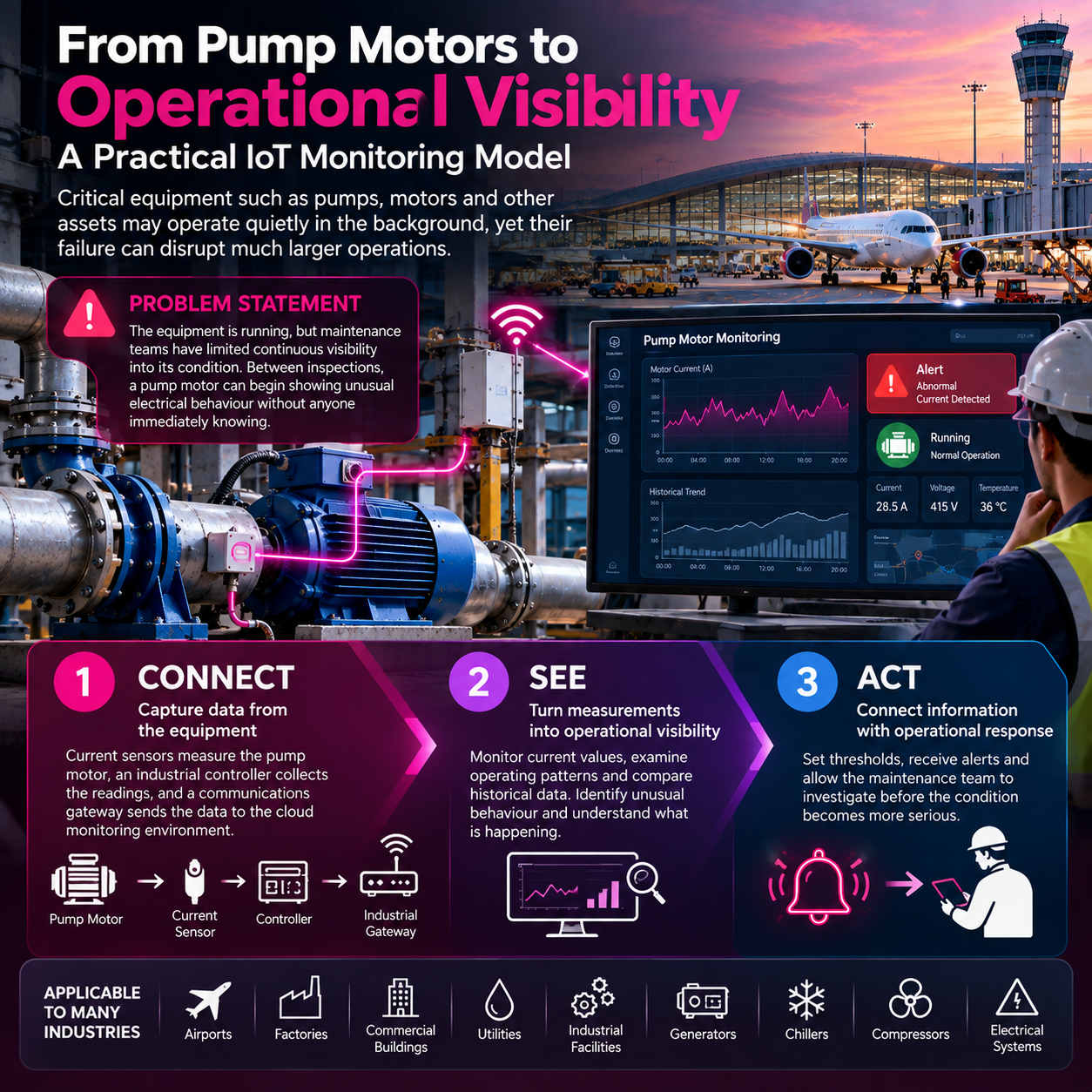
A functional real-time cold chain monitoring architecture typically operates across three layers.
The first layer is sensing. Temperature and humidity loggers embedded in packaging, on pallets, or mounted within cargo compartments capture readings at defined intervals. These are not expensive single-use data loggers retrieved at the destination. They are connected devices that transmit data continuously throughout the journey. Door sensors detect when a cold compartment is opened. GPS coordinates are embedded alongside the condition readings so that excursions can be mapped to specific locations and events.
The second layer is connectivity and aggregation. Sensor data flows to a cloud platform over cellular, LPWAN, or satellite links depending on coverage. The platform ingests readings from multiple shipments simultaneously, applies threshold rules, and generates alerts when conditions breach acceptable ranges. This layer is where the difference between a monitoring tool and an operational tool becomes apparent. Alerts sent to a logistics manager’s phone at the moment of an excursion are operationally useful. Alerts discovered in a data download after delivery are audit evidence but not intervention.
The third layer is reporting and compliance automation. Every sensor reading, every alert, every acknowledgement, and every corrective action is timestamped and stored. Compliance reports that previously required manual aggregation from driver logs, vehicle telematics, and warehouse temperature records are generated automatically. GDP-aligned documentation, HACCP records, and ESG supply chain disclosures can be produced from the same data source.
This architecture is not experimental. It is in production deployment across pharmaceutical distribution networks, fresh produce exporters, vaccine cold chains, and high-value electronics shipments globally. The organisations that have deployed it are not primarily motivated by cost savings, though those are real. They are motivated by the realisation that a regulatory audit or a product liability event is a significantly more expensive outcome than the cost of the monitoring infrastructure itself.
The Regulatory Pressure Is Not Coming. It Is Already Here.
The timeline for cold chain compliance has compressed faster than most logistics operations expected.
In the pharmaceutical sector, the WHO’s updated guidelines on GDP for pharmaceutical products specifically call for temperature mapping, continuous monitoring during transit, and documented risk assessment for every cold chain lane. Regulatory authorities in the European Union, the United States, and increasingly across Southeast Asia have aligned their national guidelines with these standards. Distributors operating in multiple markets simultaneously are expected to meet the highest applicable standard, not the lowest.
In food safety, the regulatory trajectory is similar. FSMA in the United States, the EU Farm to Fork strategy, and regional food authority frameworks across Asia are all moving toward mandatory traceability that includes condition data, not just movement data. An exporter who can demonstrate GPS-tracked, GPS-logged provenance but cannot produce a temperature record for the cold chain transit will find that documentation insufficient in an increasingly scrutinised trading environment.
The ESG angle introduces a third compliance dimension that logistics directors are beginning to encounter in customer procurement requirements rather than regulatory filings. Large multinational buyers are embedding supply chain transparency requirements into their vendor qualification frameworks. These requirements increasingly ask suppliers to demonstrate closed-loop condition monitoring as evidence of responsible supply chain management. The reasoning is straightforward: a supply chain that cannot prove the condition of its products is a supply chain generating unquantified waste, and waste is a material ESG metric.
The Cost of Not Knowing
The financial case for cold chain monitoring is often framed around product loss prevention. That framing is accurate but incomplete.
Product losses in unmonitored cold chains are significant. In the pharmaceutical sector, temperature excursions are estimated to contribute to losses running into billions of dollars annually globally. In fresh produce, post-harvest losses attributable to cold chain failures represent a substantial share of total food waste. These are recoverable costs through insurance in some cases, but insurance claims require the documentation that unmonitored chains cannot provide.
Beyond product loss, there is the recall cost. A product recall triggered by a cold chain excursion discovered after distribution involves not just the value of the compromised product but the cost of the recall operation, the reputational damage to the brand, the regulatory investigation that follows, and in pharmaceutical cases, the patient safety exposure that drives all of these other costs.
There is also the opportunity cost of manual compliance processes. Logistics teams at organisations operating unmonitored chains spend significant time compiling temperature records from disparate sources, reconciling driver logs against warehouse records, and preparing documentation for customer or regulatory audits. That time is directly displaced by automated reporting from a connected monitoring platform.
From Presence Proof to Condition Proof
The logistics director in the opening scenario had invested in the right tracking infrastructure for 2015. GPS coverage was thorough, reporting was regular, and the chain of presence was well documented. The problem was that 2015’s tracking infrastructure was designed to answer 2015’s questions.
The questions that pharmaceutical distributors, food exporters, and high-value logistics operators are being asked today are condition questions. Regulators, buyers, insurers, and end customers all want the same thing: not proof that the shipment arrived, but proof that the shipment arrived good.
Answering that question requires a different architecture, a different data set, and a different understanding of what visibility actually means in a cold chain context. GPS tells an organisation where its goods are. Continuous condition monitoring tells an organisation whether those goods are still worth delivering.
The gap between those two answers is where compliance risk, financial exposure, and operational credibility are decided.
If your organisation’s cold chain monitoring stops at location, the question worth asking is a direct one: what would a temperature excursion during your next pharmaceutical or food consignment cost you, and what documentation would you be able to produce in response?
FAVORIOT’s IoT and AIoT platform supports real-time cold chain monitoring deployments across pharmaceutical distribution, food logistics, and compliance-driven supply chains. If the gap between location visibility and condition visibility is a live concern for your operation, schedule a meeting with the FAVORIOT team to discuss what a closed-loop monitoring architecture would look like for your specific chain.
Schedule a Meeting with FAVORIOT
Dr. Mazlan Abbas is the CEO and Co-Founder of Favoriot, an AIoT platform company focused on helping organizations connect, learn from, and act on real-world data. He writes regularly on IoT and entrepreneurship at mazlanabbas.com and iotworld.co.



Leave a Reply